
EXPERIÊNCIAS PESSOAIS
Faith and Immigration: Why I Almost Gave Up on the Canadian Dream
In this article
One Tuesday in March 2025 in Vancouver, I stared at my bank statement, my CRS, and the flight tab back to Guarulhos, and I almost bought the return ticket.
I need your prayer.
PERSEGUICAO RELIGIOSA, PROPRIEDADE EM RISCO E MAIS BIZARRICES DO GOVERNO CANADENSE | EP03
There’s one day I didn’t film, didn’t post, didn’t share. Not out of shame. It was because in that moment I couldn’t even form a coherent thought, let alone structure a video.
It was March 2025, a winter Tuesday in Vancouver. Three in the afternoon, white sky, that fine drizzle the city has. I was sitting at the kitchen table in our apartment, laptop open, looking at three things at the same time: my bank statement, my Express Entry profile, and the tab with flights from Vancouver to Guarulhos (the main airport in São Paulo).
The statement showed a number that turned my stomach. Express Entry showed a CRS that wasn’t growing at the speed I needed. The flight tab showed that a way out existed.
I sat there for about forty minutes in silence. Not the silence of peace. The silence of paralysis.
This article is about that day. And about what came after.
The buildup nobody sees
You don’t hit rock bottom from one hour to the next. You get there after a buildup of small things that keep adding up.
I arrived in Canada in September 2024. The first two months were pure adrenaline. Everything new, everything interesting, every ordinary thing turning into a discovery. That period exists for every immigrant, and it’s genuine. You’re excited because you made a big, brave decision, and the world is cooperating with the story.
Then comes the third month. The adrenaline fades. The routine begins. And reality settles in.
The reality was this: I was studying in a college program, under the pressure of keeping my grades up while learning in a language that wasn’t mine. Clara was looking for work in a market that didn’t immediately recognize her background. The social network we had came down to one or two Brazilians who had also arrived recently and were just as lost as we were.
One Sunday, my mom called from Brazil, happy, asking how everything was. I said “everything’s great” and then spent an hour unable to work.
I wasn’t depressed. I was exhausted in a way that has no easy name, the tiredness of making constant effort in an environment that doesn’t hand you anything easily. Every simple act costs more energy: going to the bank costs more because my English still locks up when I’m nervous. Making friends costs more because the social codes are different. Working on the computer costs more when your head keeps drifting back to Brazil.
That buildup is what makes immigration emotionally heavy. It isn’t one big thing that breaks you. It’s a hundred small things that don’t stop.
There’s one more element few people talk about openly: the gap between what you expected and what you’re living. I had prepared for hardship. I knew it was going to be hard. But the kind of hardship I imagined was more concrete: no money, no job, no documents. What wasn’t in the script was the specific quality of the emotional tiredness of living in a country where you haven’t found your place yet.
In Brazil, even when things were hard, I had context. I knew how to navigate the systems, I understood people, I knew the invisible shortcuts you learn from living somewhere. In Canada, I was learning everything from scratch: the shortcuts, the social codes, how to interact with a supermarket cashier in a culturally appropriate way, how to make a complaint without seeming rude, how to ask for help without seeming weak. It’s that constant learning of invisible norms that wears you down.
And while you’re learning all of that, you still have to study, work, build an Express Entry profile, follow IRCC’s policy changes, take care of your relationship, call family in Brazil with a voice that says everything’s fine. You don’t get a single day off from that effort. There isn’t one day when the weight simply disappears.
That was the context when the Tuesday in March arrived.
The winter Tuesday
So that Tuesday came.
The week had been bad in a lot of small ways. A test that didn’t go well. A visa renewal call that lasted three hours and ended with no resolution. News from Brazil that wasn’t good. A silence from LinkedIn that had been stretching on for weeks.
And there I was, looking at the statement. The numbers made sense rationally. We had planned for this period, knew it would be financially hard, had a reserve. But when your head is in the state mine was in, the numbers don’t come through the rational filter. They come through the emotional filter. And the emotional filter translated it as: “you’re burning through what you built and you’re getting nowhere.”
The flight tab was an almost automatic thought. An impulse to check whether the exit existed. And it did. Of course it did.
I sat on that tab for about five minutes. Without clicking anything.
What faith did (and didn’t do)
I’m going to be honest here, because this is the point where it would be easy to write a tidy story, and I don’t want to do that.
Faith didn’t show up in that moment like a ray of light that fixed everything. It wasn’t a verse that came out of nowhere and filled me with certainty. It wasn’t like that. It isn’t like that for me.
What happened was simpler and more human: I closed the laptop, went to the bedroom, knelt on the floor beside the bed, the way my mom taught me to pray as a child and the way I still do when I’m at the bottom, and I stayed quiet.
I didn’t ask for anything specific. I didn’t know what to ask for. I stayed in silence for about fifteen minutes and something began to reorganize itself. Not the situation. The situation stayed the same. But I was reorganizing. As if the paralysis was giving way to something smaller and more manageable: a next step.
Just one. Not the whole plan. Just the next step.
Faith worked not as a shortcut out of the problem, but as an anchor. A way of not dissolving completely when everything is moving. A place where I could be the real size I was, small, tired, scared, without having to keep up a performance for anyone.
I can’t answer whether God exists in the way people expect me to answer. What I know is that the practice of believing gave me, on that day and on other hard days, a stability that came from no other source.
What came after
I left the bedroom. I made coffee. I opened the laptop again.
I didn’t buy the return ticket. Not because I was sure I was in the right place. I still wasn’t. But because I decided not to make a permanent decision in a temporary state.
That sentence has saved me more than once: don’t make a permanent decision in a temporary state.
When you’re at the bottom, the emotional state is real but it isn’t the whole truth. It’s one slice of the process. And decisions made at the bottom tend to be exit decisions, the kind that close doors you might have wanted to keep open.
I called a Brazilian friend who had immigrated two years earlier. He listened. He didn’t give advice. He said “I know, man. I know.” That was worth more than any practical advice.
In the days that followed, I started to adjust small things: I set up a morning routine that included time away from the laptop, I started attending a local faith community (my first in-person event after weeks of social isolation), and I stopped checking my CRS every day as if it were going to change from one hour to the next.
Those adjustments didn’t fix anything structurally. But they made daily life more livable. And when daily life is livable, you can work on the real problems.
For whoever is in that place right now
If you’re in that winter Tuesday as you read this, statement, CRS, return flight open in a tab, I want you to know that this is more common than anyone’s Instagram lets you see.
It’s not weakness. It’s the real weight of the process. It’s a sign that you’re taking this seriously, that you have a lot at stake, that you care.
A few practical things that helped and might help you:
Don’t make a big decision on bad days. The impulse to leave, to change cities, to drop the program, process it, but don’t act on it on the hard days. Wait a week.
Name what you’re feeling. “I’m exhausted” is different from “I’m failing.” “I miss home” is different from “I made a mistake.” The words matter.
Look for real support. In Canada, 211 is a free service that connects you to community mental health resources, many in multiple languages. CAMH (Centre for Addiction and Mental Health) has resources for immigrants. Many Brazilian psychologists see clients abroad online.
Connect with community. Church, mosque, a group of Brazilians, a sports club, a volunteer group, any community structure that pulls you out of the isolation of the apartment and puts you in contact with human beings on a regular basis.
You don’t need to be sure it’s going to work out. You just need to decide you’re going to keep going today. Tomorrow you decide again.
What changed after the Tuesday in March
It wasn’t an instant turnaround. There’s no such thing in real life, right? What happened was more gradual: I kept making small adjustments that added up.
The first change was to stop measuring my progress daily. Express Entry doesn’t change overnight. A bank balance doesn’t flip overnight. But when you check those numbers every day, especially in the emotional state I was in, you amplify the sense of stagnation. I switched to reviewing once a week, with intention. That changed my relationship with the anxiety around those numbers.
The second change was forcing myself to be physically present with other people. I was part of a faith community but had stopped attending regularly because I “was tired” and “had things to do.” The truth is that when you’re in a bad place, isolation is the path of least resistance, and also the path that makes everything worse. I started showing up even when I didn’t want to. Over time, that space became one of the few places where I could be human without having to perform progress.
The third change was a shift in perspective that seems small but was enormous: I stopped comparing my pace with the pace of who I used to be. In Brazil, I had a 28-year trajectory built up. In Canada, I had less than 6 months. It’s mathematically impossible to have the same level of comfort, network, and stability in six months. But emotionally, we compare those two worlds all the time and feel like we’re falling behind.
Accepting that I’m at the pace of the start of a journey, not of failure, was what made it possible to keep going without that paralyzing anxiety.
What I learned about faith in the immigration process
Immigration tests things that lay dormant in a comfortable life. It tests your patience, your adaptability, your relationship with uncertainty. And, if you’re a person of faith, it tests your faith in specific ways.
God doesn’t show up as a fixer of bureaucratic problems. Faith won’t solve your CRS or make the visa come faster. But it can be the ground when the ground disappears, the place where you don’t have to be in control of everything, where you can be human and limited without that being a catastrophe.
I arrived in Canada with a faith I thought I understood. Immigration taught me that faith without testing hasn’t really been tested. And that faith that’s been tested and survived is of another quality.
I’m not preaching. I’m sharing what’s mine. You’ll have your own resource, your ground, your anchor. What matters is that you know where it is when you need it.
I got your back.
Frequently asked questions
Why do so many immigrants think about giving up in the first few months?
What do you do when you feel like giving up?
How does faith help in the immigration process?
What mental health resources exist for immigrants in Canada?
What changed after that Tuesday?
Mental health resources for immigrants in Canada
- 211 Canada: 211.ca, free service, connects you to resources by location, English and French (and other languages in many municipalities)
- CAMH, Centre for Addiction and Mental Health: camh.ca, resources and a crisis line in Ontario
- Crisis Services Canada: 1-833-456-4566, 24-hour crisis line
- Culture shock and adaptation: Guide for Brazilians in Canada (MorarFora)
- My journey: Why I Decided to Leave Brazil (MorarFora)
- First steps: What to Do When You Arrive in Canada (MorarFora)
The Vancouver Letter
You made it this far. That tells me something.
The Vancouver Letter is the letter I wish someone had sent me the third time I tried for Canada, when I had no idea what I was doing wrong. Once a week, straight to your inbox. No products, no courses, just what actually works. I got your back.
Get immigration updates
Practical tips straight to your inbox.
Related articles
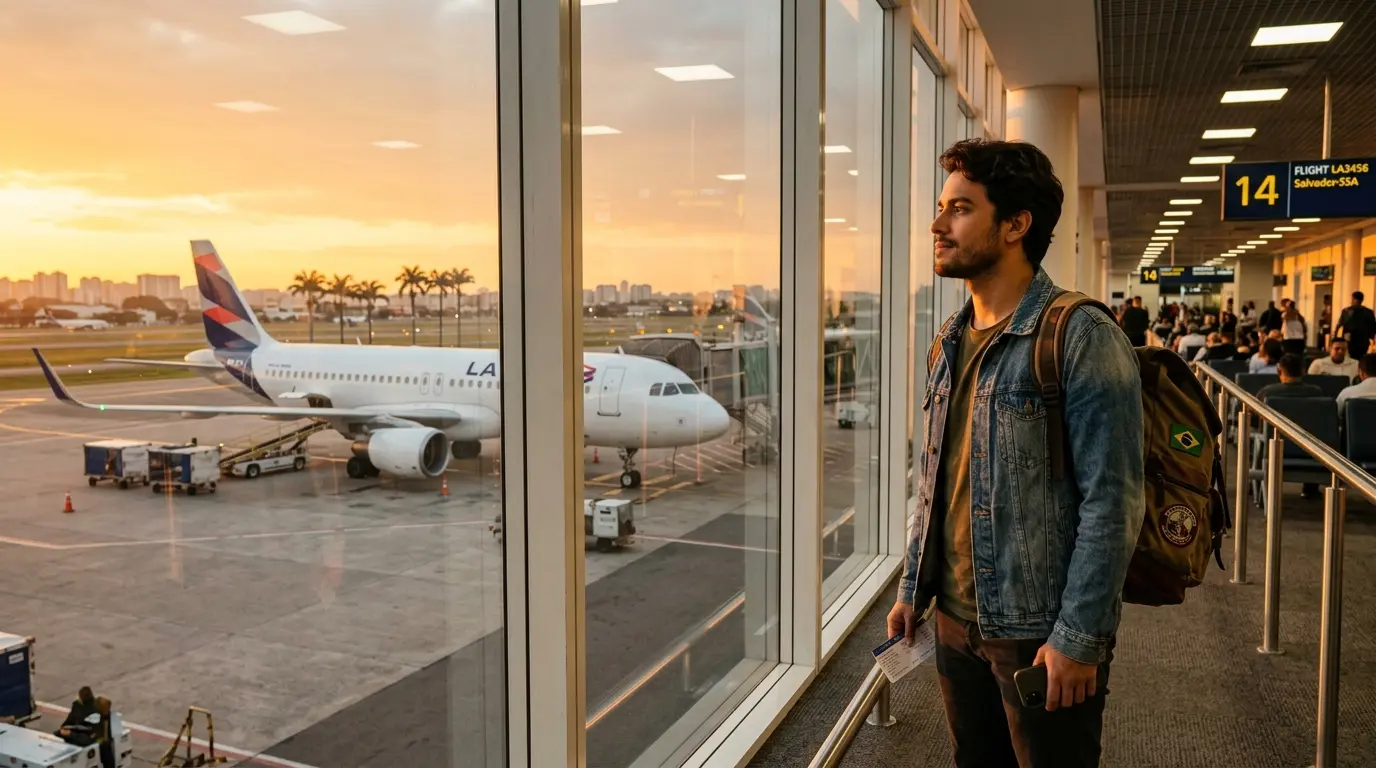
My Journey: Why I Decided to Leave Brazil
From Presidente Prudente to Vancouver: three visa refusals, a fake data analyst job scam, and demolition work at 4:30 a.m. before landing at an AI startup.
You're Not Tired, You're Disconnected (and It's Destroying You)
In Vancouver since Sept 2024, I realized: the Brazilian immigrant thinks he is tired, but he is disconnected, from God, from Clara, from family 11,000 km away.

Culture shock: 10 things that surprise Brazilians in Canada
10 culture shocks Brazil to Canada: silence on the SkyTrain, dinner at 5:30 p.m., 15-20% tipping (even at the barber), tax not in the price, dark by 4:30 p.m.