
PROGRAMAS DE IMIGRAÇÃO
French: The Secret Weapon of Express Entry the Numbers Prove
In this article
42% of ITAs outside Quebec in 2025 were French draws. General CRS 508 vs French 397 (111-point gap). NCLC 7 adds up to 87 points.
5 Segredos Para Aumentar Suas Chances No Express Entry!
Frances Pt2 | A Continuação
Saiba tudo para vir para o Canadá
I’m going to tell you something that completely changed my immigration strategy. And it wasn’t advice from someone, it wasn’t a motivational video, it was the numbers. I’m a data analyst, man. My job is to look at the spreadsheet and let the data talk. And when I did that with Express Entry, what showed up in front of me left my jaw on the floor.
But before getting into the numbers, let me give you the context. I arrived in Canada in September 2024. Brazilian, from São Paulo, on a study permit. When I calculated my CRS for the first time, my stomach dropped. The general draws were asking for 500+ points and I was far from that. Really far. It feels like being in a race where everyone is already ahead and you haven’t even left the starting blocks.
That’s when I started doing what I do best: analyzing data. And what I found out about French in Express Entry is, with no exaggeration, the most valuable piece of information I’ve ever come across about immigrating to Canada.
What are the French numbers in Express Entry?
I’ll be direct: in 2025, 42% of ALL ITAs issued outside Quebec were in French draws. Forty-two percent. Almost half. Out of a total of roughly 114,000 ITAs in the year, 48,000 were in category-based draws, and French dominated.
And you know what’s more impressive? It’s estimated that over 60% of candidates approved in CEC also spoke French. In other words, even in the “general” draws, French speakers have the edge.
When I saw these numbers, man, I literally stopped what I was doing and told Clara: “We need to bet everything on French.” And this isn’t my opinion, it’s the data. The data doesn’t lie.
How French works in the CRS: the full breakdown
This is where the magic happens. The CRS scoring system gives brutal bonuses to French speakers. Look at this breakdown:
- French as first official language (NCLC 7+): roughly 50 bonus points
- English as second official language: roughly 24 additional points
- Combined bonus total: more than 70 extra points
Now think with me. If you have a CRS of 459, which is a solid score but not enough for the general draw, and you add French at NCLC 7 or higher, your CRS can jump to something like 546 points. That’s a leap of roughly 87 points.
Eighty-seven points. No other variable in the CRS gives you that. Not perfect age, not a master’s, not three years of Canadian experience. French is, by far, the biggest CRS boost that exists.
French vs English: which weighs more in the CRS?
The short answer: both languages carry the same base weight in the CRS, but French brings a bonus of up to 50 extra points that English doesn’t, plus it opens access to draws with a CRS cutoff 111 points below the general CEC.
Look at the comparison table for the 4 levels of CLB/NCLC (single candidate and couple):
| NCLC / CLB | English (CLB), single / couple | French (NCLC), single / couple | French bonus (single) |
|---|---|---|---|
| 7 | 36 / 20 pts | 36 / 20 pts | +50 pts¹ |
| 8 | 36 / 20 pts | 36 / 20 pts | +50 pts |
| 9 | 48 / 24 pts | 48 / 24 pts | +50 pts |
| 10+ | 48 / 24 pts | 48 / 24 pts | +50 pts |
¹ 50 pt bonus when French is NCLC 7+ AND English is CLB 7+. If English is CLB 5-6: +25 pts; with no English: +15 pts. It applies in the CRS “Additional points” section, separate from the base language points.
Beyond the CRS points: those with NCLC 7+ access francophone category draws. In March 2026, the cutoff was 397 CRS against 508 in the general CEC. It’s not additional points directly, but it’s 111 points of CRS less that you need at the draw threshold.
The total calculation for someone who invests in 2 languages (French NCLC 7 as 1st + English CLB 9 as 2nd): 48 pts (French FOL) + 24 pts (English SOL) + 50 pts (bonus) = 122 pts of language in the CRS, against 48 pts for someone with only English CLB 9.
How does the French draw compare to the general one?
Now comes the part that really changed my mind. I’ll show you two paths to the same destination: permanent residence.
Path 1: General CEC draw (no French)
- CRS needed: 508-509 points (March-April 2026 data)
- Candidate pool: 73,609 people with CRS between 451-500, fighting for a spot
- Plus 16,559 with CRS between 501-600
- Competition: BRUTAL
Path 2: Francophone draw
- CRS needed: 397 points (March 2026 data)
- All-time low: 336 points (February 2024)
- Competition: SIGNIFICANTLY lower
The difference? 111 points. One hundred and eleven points between the general draw and the French draw. That’s ABSURD, man.
To put it in practical terms: a francophone with a base CRS of just 300 points, after adding the French bonuses, gets close to the threshold of the francophone draws. Meanwhile someone without French needs a much stronger profile in ALL the other areas.
It’s like there are two lines for the same plane. One huge line, with everyone pushing each other, and a smaller, faster line with fewer people. And the only thing you need to get into the smaller line is to speak French.
The government is literally telling you what to do
I’m not one for conspiracy theories. But when the Canadian government puts on paper that the francophone target outside Quebec is 9% in 2026 and will rise to 12% by 2029, that’s a clear message. They’re shouting: “We NEED people who speak French.”
And it makes sense. Canada is officially bilingual: English and French. But outside Quebec, the francophone population is a minority and shrinking. The government has a strategic interest in changing that. And the tool they use to change it? Express Entry.
When I understood that as a data analyst, it became obvious: French isn’t a “nice option” in Express Entry. It’s THE strategy. It’s what the system itself is incentivizing.
My journey with French: the naked truth
Now, I need to be honest. Learning French isn’t easy. I started basically from zero. The first weeks were humiliating, man. I couldn’t even introduce myself properly. “Je m’appelle Caio” and that was a stretch.
And yes, as a Brazilian, we have a huge advantage over Indians, Chinese, and even Americans: French is a Romance language, like Portuguese. A lot of it is similar. Vocabulary, structure, even the sound. But “similar” doesn’t mean “easy”. French pronunciation is another universe. The irregular verbs are endless. And the gap between what you read and what you hear is enormous.
But you know what kept me motivated? These same numbers I’m showing you now. Every time I wanted to give up on a French lesson, I’d open the spreadsheet and look: 397 vs 508. And I kept studying.
I’m using the Francophone Mobility program for my work permit, which requires at least NCLC 5 in French. But for Express Entry, the target is NCLC 7 or higher, because that’s where the bigger bonuses kick in. And that’s exactly what I’m aiming for.
Practical strategy: how to get there
If you’re convinced by the data (and if you’re not, reread the numbers above), here’s the practical plan:
1. Start NOW, not tomorrow
French at NCLC 5 (the minimum for Francophone Mobility) takes about 6-12 months of consistent study. NCLC 7 (to maximize CRS points) can take 12-18 months depending on your dedication. Every day you put it off is one less day of preparation.
2. Choose your exam: TCF or TEF
The two accepted exams are:
- TCF Canada, from France Éducation International. More popular, more predictable format
- TEF Canada, from the Chambre de commerce Paris Île-de-France. Some people find it harder
I’m personally focusing on the TCF. I researched both a lot and felt that the TCF format fits my study style better.
3. Study with focus on the 4 skills
The exam assesses four skills, and you need a score in ALL of them:
- Compréhension orale (listening comprehension)
- Compréhension écrite (reading comprehension)
- Expression orale (speaking)
- Expression écrite (writing)
There’s no point being excellent at reading and bombing the speaking part. IRCC looks at each skill separately.
4. Use free resources (including ours)
Look, I spent months organizing my French study notes and decided to turn them into a free course here on MorarFora. The French course for the TCF has 35 lessons organized into 7 modules, covering everything from fundamentals to advanced speaking. It’s based on what I actually studied, not on textbook theory. If you’re starting from zero or want to organize your studies, take a look, it’s 100% free.
5. Realistic timeline
- Months 1-3: Fundamentals. Alphabet, pronunciation, basic grammar, everyday vocabulary
- Months 4-6: Intermediate. Texts, simple conversations, first practice tests
- Months 7-12: Advanced. Full practice tests, speaking/writing practice, refinement
- Month 12+: Book and take the exam
Why is it hard to book TEF/TCF in Canada in 2026?
And here’s a VERY important warning I need to give you. In April 2026, it’s extremely hard to get a slot to take the TEF or TCF in Canada. Slots are filling up months in advance. MONTHS.
Think about the irony: everyone discovered the power of French at the same time. Demand exploded. And the supply of exam slots didn’t keep up.
What does that mean in practice? You can be ready to take the exam and not get a date. You might have to travel to another city to find a slot. I’ve heard of people who went from Vancouver to Calgary just to take the TCF.
So my tip: book your exam as early as possible. Even if you think you’re not ready. Reserve the date and use it as a deadline to prepare. If you wait to book only when you feel ready, you might find there’s no slot available for months.
How does French help in PNPs beyond federal Express Entry?
As if the federal bonuses weren’t enough, the federal government handed out 10,000 extra PNP nominations specifically for francophones and doctors. Ten thousand.
And it gets even better: provinces like Alberta are incorporating French ability into their EOI (Expression of Interest) scoring system. And guess what? To get the francophone points in Alberta, you don’t even need NCLC 7. The threshold is lower.
In other words, French doesn’t just help you in federal Express Entry, it also opens doors in the provincial programs. It’s an opportunity multiplier.
How does French work in category draws?
Another point a lot of people don’t know: in category-based draws (healthcare, STEM, transport, agriculture), one of the alternative ways to qualify is by having French at NCLC 7. In other words, even if your profession isn’t on the priority list, French can get you inside the draw.
And even partial French, like NCLC 5 in some skills, already adds valuable points to your profile. It’s not all or nothing. Every point counts.
How long does processing take after the ITA?
After you receive the ITA, Express Entry processing takes on average 7 months. Seven months between “you’ve been invited” and “welcome to Canada as a permanent resident”. It’s relatively fast compared to other immigration paths.
But those 7 months only start counting AFTER you already have the French, have taken the exam, have created the profile, and have received the invitation. That’s why I insist: start now. Every month of delay is one more month waiting for your PR.
What I wish someone had told me
If I could go back in time and give one piece of advice to the Caio who arrived in Canada in September 2024, it would be this: start studying French on day 1. Not the day you “get settled”. Not when you “have time”. On day 1.
I lost a good few months thinking French was “optional” or “for people who want to go to Quebec”. When I finally sat down, analyzed the Express Entry data, and saw how much weight French carries… man, I was mad at myself for not starting sooner.
But look, I believe everything has its time. God put me on this journey and every obstacle I faced, the visa denials, the months in retail, the nights studying after work, all of it is part of it. If you’re reading this today, it might be exactly the push you needed.
What are the summarized French numbers in Express Entry?
| Metric | Without French | With French (NCLC 7+) |
|---|---|---|
| CRS needed (draw) | ~508 | ~397 |
| CRS bonus available | 0 | ~87 points |
| % of ITAs (2025) | 58% shared | 42% French exclusive |
| PNP bonus nominations | standard | 10,000 extra |
| All-time low CRS | ~481 | ~336 |
If you’re not considering French in your Express Entry strategy in 2026, you’re literally ignoring the biggest competitive advantage available. The data is clear. The numbers don’t lie.
Want to see the impact of French on your specific CRS? Use the CRS Calculator and compare your score with and without the French bonus (NCLC 7+). It’s instant and free.
Start today. Open the French course here on MorarFora, watch the first lesson, and take the first step. Twelve months from now, you’ll look back and thank yourself for starting now.
I got your back. Any questions, reach out.
Frequently asked questions
French vs English: which weighs more in the Express Entry CRS?
How many points does French add to the CRS?
What is the CRS difference between the general draw and the French draw?
What level of French do I need for Express Entry?
TCF or TEF: which exam to choose?
How long does it take to reach NCLC 7 in French?
The Vancouver Letter
You made it this far. That tells me something.
The Vancouver Letter is the letter I wish someone had sent me the third time I tried for Canada, when I had no idea what I was doing wrong. Once a week, straight to your inbox. No products, no courses, just what actually works. I got your back.
Get immigration updates
Practical tips straight to your inbox.
Related articles
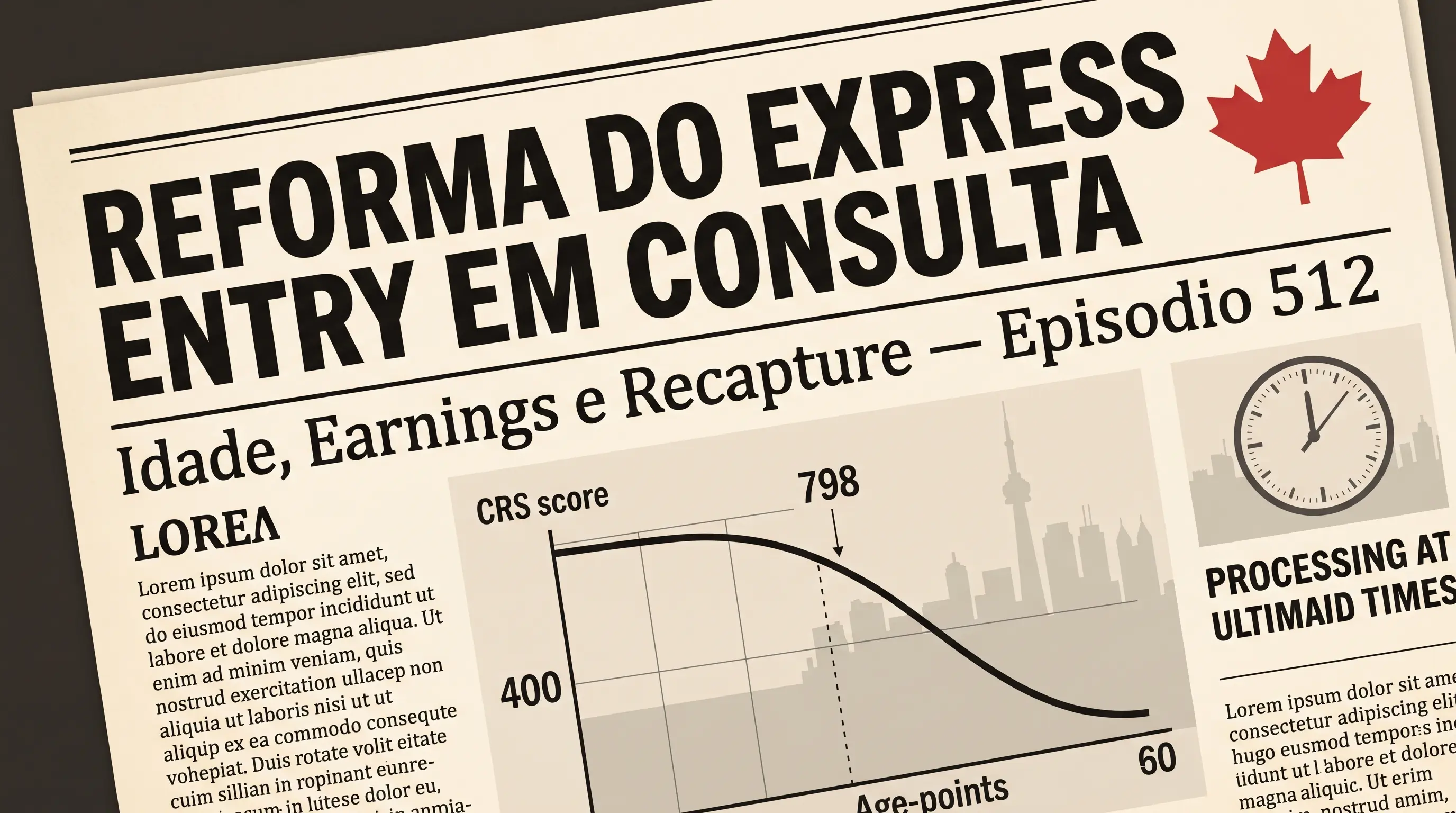
Ep 512: Express Entry under consultation, age in CRS and recapture [Canadian Immigration Institute]
Episode 512 of the Canadian Immigration Institute (May 14, 2026): Express Entry reform is in public consultation, age in the CRS, and work permit recapture.
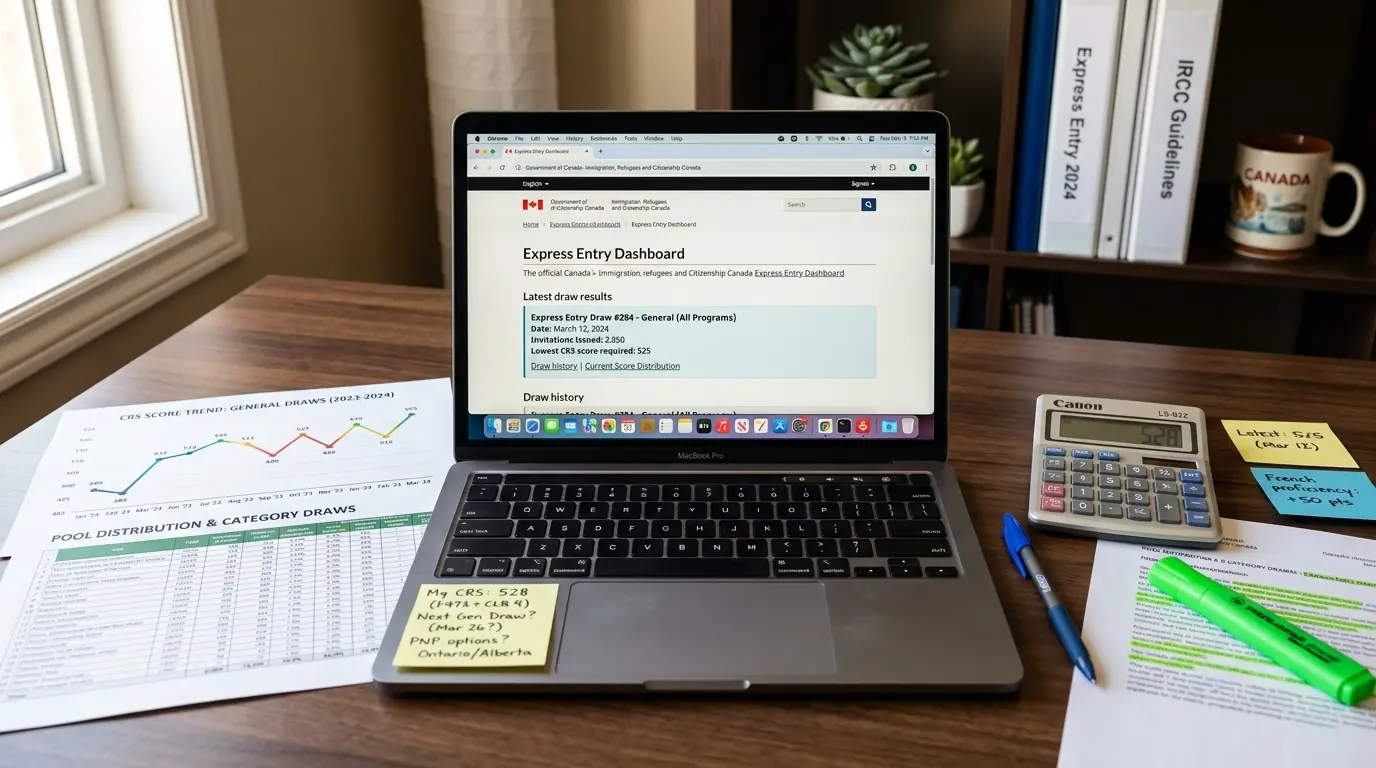
Express Entry in 2026: everything that changed and what to expect
Express Entry 2026: PR takes 6–8 months from submission to COPR; general CRS stuck at 508–509, categories reach 169 (physicians) and 397 (French). 109k spots.
Express Entry in May 2026: the recent draws and what they mean for Brazilians
The May 2026 Express Entry draws: CEC 3,000 (CRS 518), French 4,500 (CRS 409), two PNP rounds and the reform that closed consultation on May 24.