
CULTURA E ADAPTAÇÃO
How to build a professional network from scratch in Canada
In this article
70 to 80% of jobs in Canada are never posted. A 20-minute chat at a Vancouver meetup beats 6 months of online applications.
Como o Networking, Eventos e LinkedIn Pode Mudar Sua Carreira no Canada!
Como Montar um Curriculo CANADENSE Irresistivel para as empresas
Como fazer um curriculo perfeito com ChatGPT em minutos!
I spent six months sending out résumés. Six months. Every day, in the morning, I opened LinkedIn, Indeed, and Glassdoor, tweaked the résumé, wrote a cover letter, clicked “Apply”, and waited. The reply that landed in my inbox was, at best, an automated email saying “thanks for applying, we’ll review your profile”. At worst, total silence.
You know what changed everything? A twenty-minute conversation at a tech meetup in Vancouver that cost zero dollars.
I met someone. She wasn’t a director, she wasn’t a recruiter, she had no hiring authority. She was a senior dev at a mid-sized company. We grabbed coffee after the event, I explained what I did, she liked the conversation. Three weeks later, she messaged me: “a role is opening up here next week, send me your résumé before HR posts it”.
I got interviewed. I got hired.
Man, no LinkedIn apply ever gave me that. No carefully calibrated cover letter came close. A twenty-minute conversation with a real person opened a door that six months of online applications couldn’t even touch.
This article is about how you build that structure from scratch, when you don’t know anyone.
Why a résumé doesn’t work on its own
There’s a stat that gets passed around a lot in career circles in Canada, and it’s real: it’s estimated that 70 to 80% of jobs are never posted. They get filled through referrals, through an inside contact, through “I know someone”. This phenomenon has a name: the “hidden job market”.
This isn’t unique to Canada, but here it’s especially pronounced. Canadian hiring culture strongly favours personal referrals. A résumé from an unknown candidate competes with hundreds of other unknown résumés. A candidate someone on the inside knows, even slightly, moves straight into the “worth a conversation” pile.
The problem is that a newly arrived immigrant has, by definition, zero network. You don’t have the ten years of professional relationships that someone who grew up here has. You’re building from scratch, in a new country, possibly with an accent, possibly with credentials that need to be translated and explained, possibly with a name the recruiter can’t pronounce.
That sounds like a huge disadvantage. And it is, if you play the wrong game. If you play the right game, networking is exactly where an immigrant can level the field.
Why? Because most immigrants are sending résumés on Indeed. They’re not at the Thursday night event. They’re not at the industry meetup. They’re not sending follow-up messages consistently. If you do these things, you stand out, not by being better, but by being visible.
How do you use LinkedIn in the Canadian context?
Before I talk about events and in-person networks, I need to talk about LinkedIn, because most Brazilians use LinkedIn the wrong way in the Canadian context.
In Brazil, LinkedIn is more or less a digital copy of your résumé. You list your jobs, your education, and you wait for the recruiter to find you. Engagement is low, posts are rare, the “About” section tends to be generic or empty.
In Canada, LinkedIn works like a real professional social network. Recruiters spend hours a day there. People post, comment, share industry insights. The social proof of showing up in the comments of relevant posts in your field has real value, because people from companies you want to join will see you.
A few practical changes that make a difference:
Headline: Don’t just list your job title. Use the headline to communicate value and expertise. Instead of “Data Analyst”, try “Data Analyst | Python · SQL · Power BI | Helping companies make data-driven decisions”. Recruiters search by keyword.
About: Write in the first person, in English, in a conversational way. Tell your story, what you do, what you’re looking for. Be specific. People who read your “About” and feel like they know you a bit are far more likely to accept a connection or reply to a message.
Photo: Professional photo, neutral background, visible face, friendly expression. In Canada, this matters more than it does in Brazil. A profile with no photo has a significantly lower response rate.
Connect with intent: Don’t send a blank invite to everyone. Send it with a short, genuine message: “I saw you work with data at company X. I’m in a career transition and would love to connect.” Your acceptance rate goes up a lot.
Post: It doesn’t have to go viral. It just has to be consistent. One post a week about something you learned, a problem you solved, a tool you found useful. Over time, people in your field start to know your name, even without ever meeting you in person.
Which 5 paths work for building a network?
Beyond LinkedIn, these are the strategies that actually built my network in Canada, most of them free or nearly free.
1. Meetup.com and Eventbrite
These two platforms are goldmines of free or cheap professional events in any mid-sized-and-up Canadian city. Go there right now and search for your industry plus your city. Tech, finance, marketing, healthcare, data: there’s a group for almost everything.
The key isn’t going to just any event. It’s going to the same group repeatedly. First meeting, you don’t know anyone and you feel awkward. Second meeting, you already recognize three folks. Third meeting, two of them already know your name. By the fourth, you’re already a “regular” in that group, and that’s when connections start happening naturally.
Consistent presence beats a brilliant introduction, every time.
2. Strategic volunteering
This I learned from a friend who arrived in Canada with nothing and within two years was well employed in finance. His secret: he spent his first three months volunteering at two non-profit organizations, one of them tied to his field.
When you volunteer, you meet people of all ages and backgrounds. Many of them work at companies that could hire you. You show up, you’re consistent, you’re reliable, and those are qualities that count for a lot when it comes to a referral. On top of that, volunteering in Canada counts as experience on your résumé, which helps anyone still building local work history.
Organizations like ACCES Employment, Skills for Change, and MOSAIC (for BC) exist specifically to help immigrants enter the job market. They have mentorship programs, résumé workshops, and networking events, all free or at minimal cost.
3. The coffee chat
This is a common practice in Canada that Brazilians rarely use because it feels “intrusive” or “asking too much”. It isn’t.
A coffee chat is a 20 to 30 minute conversation with someone in your field of interest, where you ask for perspectives on the industry, not for a job. It’s completely normal to ask for this on LinkedIn: “Hi [name], I’m a data analyst who recently arrived in Canada and I’m learning about the local market. Would you be up for a quick 20-minute chat? I can work around your schedule.”
Most people say yes because it’s a small, pleasant ask. You learn about the industry, about the company, about what hiring teams value. And every so often, the conversation evolves into an opportunity, or into a referral to someone else.
The etiquette: be on time, don’t go over the agreed time, send a thank-you email afterward, and keep in touch occasionally after that.
4. Alumni networks and immigrant professional associations
If you took a course in Canada, college, university extension, bootcamp, the alumni network is an underused resource. Canadian universities have alumni portals with forums, job listings, and events. Many graduates are willing to talk to fellow alumni.
This works in Brazil too: if your home-country company has operations in Canada or an alumni network, that can be a way in.
But there’s an even more specific category many immigrants ignore: immigrant professional associations organized by field. In Vancouver, IWIB (Immigrant Women in Business) and similar groups connect professionals from different backgrounds who went through the same career-rebuilding process you’re in. In Toronto, ACCES Employment goes beyond the workshops and runs regular sector-specific networking events, with real employers present, not just candidates.
These groups have an advantage that native groups don’t: the people inside them understand what it’s like to arrive with no network, no local references, no credit history. They get the starting point. That level of mutual understanding creates faster and more genuine connections than a generic networking event.
And there’s an important cultural detail here, something I explain in more depth in the guide on culture shock for Brazilians in Canada: what feels like “asking too much” in the Brazilian context is usually completely normal here. Asking for a coffee chat, asking for an internal referral, asking for honest feedback on your résumé, that’s not intrusive in Canadian professional culture. It’s expected. If you’re waiting for the other person to make the opening move, you’ll be waiting a long time.
5. Online communities in your field
Discord, Slack, Reddit, specific LinkedIn groups, every field has its communities. For data: Data Engineering Weekly, dbt Community Slack, Locally Optimistic. For tech: Meetup groups that have digital channels, subreddits like r/cscareerquestionsCAD.
Participating actively in these communities puts you on the radar of people you’d never meet in person. And when an opportunity comes up, you’re no longer a stranger.
Which mistakes slow down your networking?
A few patterns I’ve seen in immigrants who took longer than they needed to break into the market:
Waiting until you’re “ready”: A lot of people keep waiting for perfect English, the perfect résumé, the Canadian experience they don’t have yet. Your network is built while you’re in that process, not after.
Only connecting with Brazilians: It’s natural to seek out people who speak your language. But if your whole network is Brazilian, you’re in the same pool as everyone else. Diversify.
Giving up after the second no: Most coffee chat messages get no reply. Of the ones that do, not all result in an opportunity. That’s normal. The game is volume and consistency.
Going to the event and not talking to anyone: Going to the meetup and staring at your phone the whole time doesn’t count. You need to introduce yourself. Yes, it’s uncomfortable. Yes, you’ll stumble over your words. Do it anyway.
The right mindset
There’s a line I heard in a coffee chat that I can’t get out of my head: “In Canada, people hire people they know or people vouched for by people they know.”
In Canada, people hire those they know or those someone they trust has vouched for.
This isn’t nepotism. It’s trust. And trust is built with time, presence, and consistency. There’s no shortcut. But there’s no mystery either.
You’ll show up at the event, you’ll feel out of place, you’ll freeze up in English, you’ll leave thinking it was a waste of time. And you’ll go back. And on the fourth or fifth time, something will start to click.
It takes longer than you’d like. But it works.
One thing I learned in the process: networking isn’t about impressing people. It’s about being memorable in a positive way. The people who succeed at building networks here aren’t necessarily the most eloquent or the ones with the most impressive résumé. They’re the ones who show up regularly, who are genuinely curious about other people’s work, who follow through on what they promise, and who help when they can, even before they need help.
That last part is counterintuitive for someone arriving in a hurry to break into the market: give before you ask. If you see a job that isn’t for you but is ideal for someone in your network, send it to that person. If you know about a tool someone asked about at the meetup, share it. If you can answer another immigrant’s question about how the banking system works, answer it. Every small contribution creates a positive credit in the network, and positive credits come back in ways you can’t predict.
I sent between 3,000 and 5,000 résumés over 18 months before I broke into tech. What finally opened the door was a combination of consistent presence at industry events and a connection I had helped months earlier without expecting anything in return. He remembered. He referred me. And that’s when the conversation happened.
I got your back, man. This process is long, but you’re not alone in it.
Resources mentioned
- ACCES Employment: free job-market integration programs for immigrants
- Skills for Change: training and networking for newcomers (Toronto)
- MOSAIC: employment services for immigrants in BC
- Meetup.com: professional groups by city and sector
- Eventbrite: professional events, many of them free
Frequently asked questions
Why does a résumé alone not work in Canada?
How is Canadian LinkedIn different from Brazilian LinkedIn?
What is a coffee chat?
Where do you find free networking events?
How long does it take to build effective networking?
Read also: The Job Market in Canada in 2026 and First Steps When You Arrive in Canada
The Vancouver Letter
You made it this far. That tells me something.
The Vancouver Letter is the letter I wish someone had sent me the third time I tried for Canada, when I had no idea what I was doing wrong. Once a week, straight to your inbox. No products, no courses, just what actually works. I got your back.
Get immigration updates
Practical tips straight to your inbox.
Related articles

The job market in Canada in 2026: real opportunities
Canada's 2026 job market: unemployment 5.5-6.5%, but 70% of jobs come from referrals. I started in demolition at $23/hour. A real guide from a Brazilian.

Best Cities in Canada for Brazilians: Where Should You Live?
Monthly cost: Calgary CAD 3,361, Toronto CAD 3,797, Vancouver CAD 4,194 (1BR suburb). Complete guide to 8 Canadian cities for Brazilians.
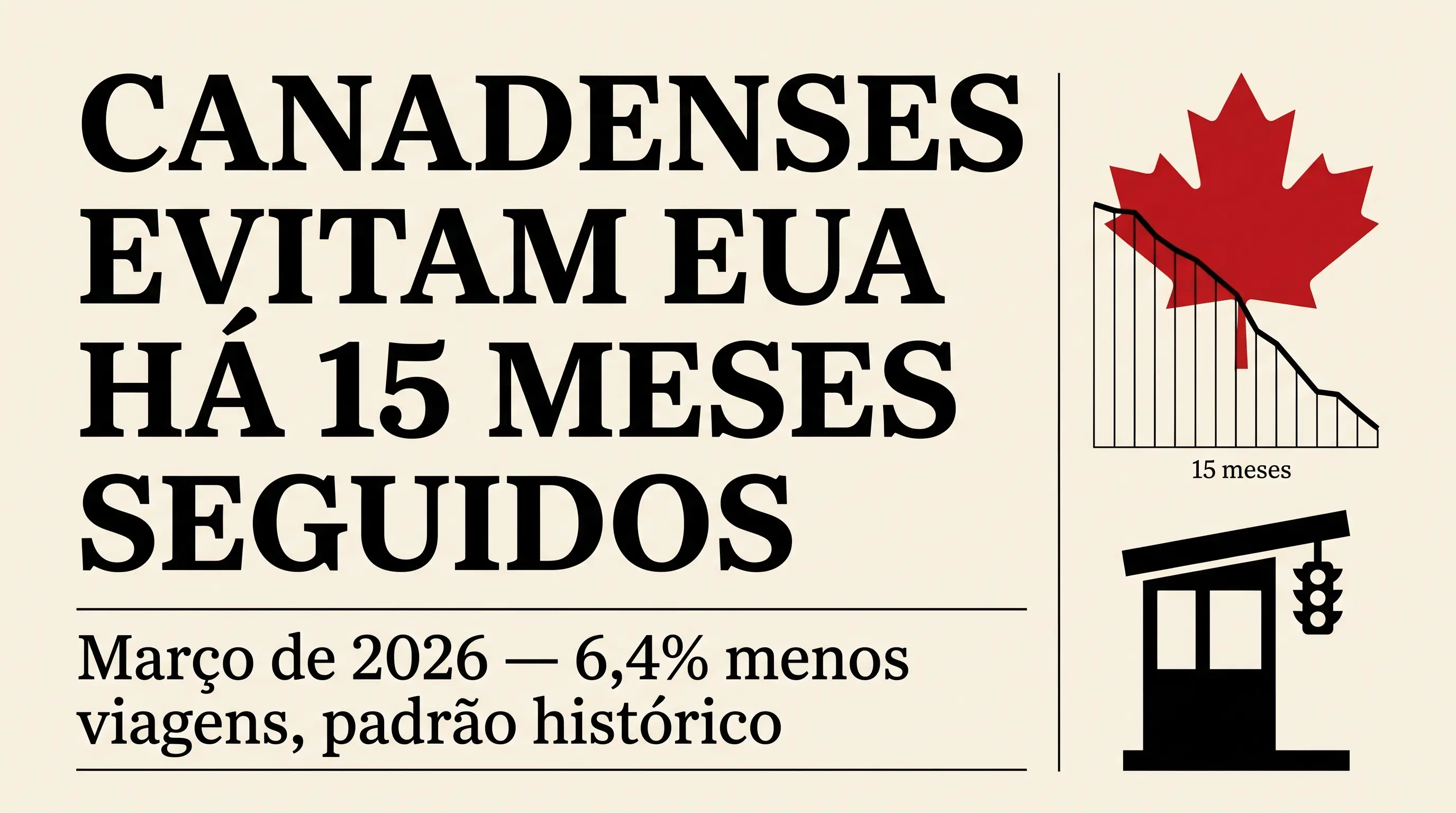
Canada-US travel in March 2026: 15th straight month of decline
Canadians made 6.4% fewer trips to the US in March, 15 straight months of decline. Brazilian visitors to Canada dropped too. Politics matters.