CULTURA E ADAPTAÇÃO
Canada-US travel in March 2026: 15th straight month of decline
In this article
Canadians made 6.4% fewer trips to the US in March, 15 straight months of decline. Brazilian visitors to Canada dropped too. Politics matters.
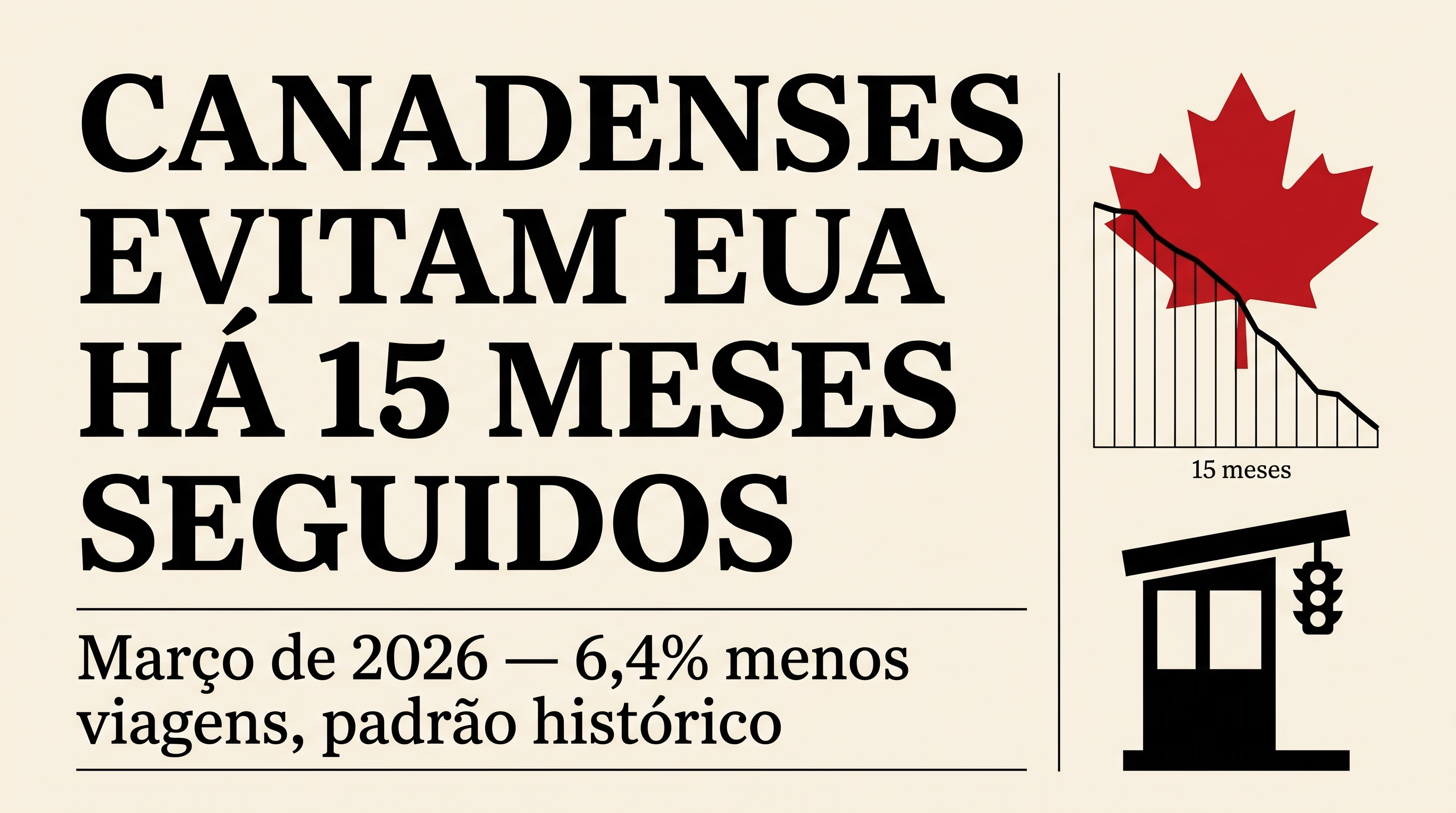
Look, this number is political: 2.6 million trips by Canadians to the United States in March 2026, a drop of 6.4% over 12 months. The detail that matters is that this was the 15th straight month of decline, a run that started in January 2025, exactly when the trade tensions between Canada and the US went from “campaign noise” to “tariff published in the Federal Register”.
For those of us who live here, this isn’t a back-page news number. It’s the behaviour of an entire population shifting in real time. And Brazilians living in Canada are right in the middle of this wave, because Disney, Las Vegas, Miami and New York are still obvious destinations for family visiting from Brazil or for quick vacations for people working here.
Statistics Canada released the data on May 21, 2026, the official report from the Frontier Counts series, which has measured every border crossing into Canada since 1972. And the report goes further: Brazilian visitors to Canada also dropped in March. That has direct implications for anyone planning to bring family over, or for anyone thinking about immigrating who needs to understand the self-image Canada is building in 2026.
How much did Canadian trips to the US fall in March 2026?
Canadians made 2.6 million return trips from the US in March 2026, a drop of 6.4% over 12 months. This was the 15th straight month of year-over-year decline in the run that began in January 2025. Compared with March 2024, two years ago, the drop is much deeper: -28.0% in total, almost a third fewer trips.
The decline is harder by air than by car. Air return trips from the US fell 10.8% over 12 months, 934,100 trips in March 2026. By car, the drop was smaller: -3.3% over 12 months, with 1.6 million trips. But of those car trips, 63.7% were same-day return trips, the kind of short crossing that Canadians near the border make to buy gas, milk and cheese in the US, and that props up the overall number.
When the report compares with March 2024, the size of the pullback becomes clear. Car trips fell 33.7% over two years. Air trips, 15.3%. The pullback is bigger by car than by air, which makes sense: long vacations planned months ahead are more rigid, while the weekend trip to Bellingham for a Costco run is the first thing cancelled when someone decides “no, this month I’m not giving money to that side”.
Why have Canadians been avoiding the US for 15 months?
Statistics Canada puts it bluntly in the release: “travel trends among Canadian residents have shifted alongside the political tensions between Canada and the United States starting in early 2025”. It’s the most political sentence a Frontier Counts report publishes, and the number of 15 straight months of decline confirms the reading.
The StatCan sentence points to early 2025 as the turning point, exactly when the Canada-US trade tensions escalated from campaign rhetoric to applied policy. From that trigger, the monthly figures entered a run of year-over-year decline that has held for 15 months without a break. StatCan doesn’t detail which specific decisions weighed on each month, but the aggregate pattern is clear: starting in January 2025, Canadians began avoiding trips to the US, and they haven’t stopped.
What makes this pattern rare is its duration. 15 straight months of year-over-year decline in international travel is the kind of run that normally only shows up in a pandemic, a severe economic crisis or an acute political crisis. This isn’t fluctuation, it’s a realignment of behaviour. And the detail that confirms it is the 28% drop over two years: it’s not coming back, it’s going deeper.
Where are Canadians going instead of the US?
To other countries around the world. Canadians made 1.6 million return trips from overseas in March 2026, up 3.5% over 12 months. That means while traffic to the US was melting away, traffic to Europe, Asia, Latin America and other destinations grew. The substitution is visible in the aggregate.
And something statistically notable happened: return trips from overseas (1.6 million) overtook return trips from the US by car (also 1.6 million, but 19,400 fewer) in March 2026, for the third straight month. For context: since the Frontier Counts series began being recorded digitally in 1972, this has only happened three times on record, excluding the COVID-19 period. It’s a milestone.
For Brazilians living in Canada, this reshapes the social picture. If you’re planning a trip to Orlando to take the kids to Disney, you’ll be swimming against a strong tide of Canadian public opinion. Expect awkward conversations with coworkers asking “oh, you’re going to the States now?”. It’s not a ban, it’s just that it has become a choice you need to justify, something that wasn’t happening in 2024.
Why did Brazilian visitors to Canada drop in March?
Statistics Canada names Brazil directly in the March 2026 report: the seasonally adjusted monthly decline in overseas visitors was led by fewer trips from Brazil, South Korea and France, offsetting larger volumes from Mexico and Germany. In total, 349,100 overseas residents arrived in Canada in March, up 5.6% over 12 months, but Europe drove the growth while Brazil lagged behind.
The StatCan release doesn’t cite the reasons for the monthly drop in Brazilian visitors, it only names Brazil as one of the countries that pulled the seasonally adjusted reading down. To understand why, it’s worth considering factors known to weigh on long-haul tourism: airfare between Brazil and Canada, the CAD/BRL exchange rate, and seasonal windows (March is late summer in the southern hemisphere plus early spring in Canada, the transition from low to shoulder season). These weights vary month to month, but the decline signal in March 2026 runs against the broader overseas trend (which grew 5.6% on the year), so some specific combination of these factors pushed the Brazilian number down.
There’s one positive data point: the top 3 overseas countries sending visitors to Canada in March were the United Kingdom, Mexico and India, together accounting for 31.1% of overseas arrivals. Brazil isn’t on that list. For those of us living here who were expecting family to visit in the coming months, the honest reading is: flights aren’t going to get cheaper, so it’s better for the Brazilian here to go visit Brazil than to wait for family to arrive, at least in 2026.
How did Americans react? Are they still coming to Canada?
Yes, and in greater volume. 1.3 million American residents came to Canada in March 2026, up 4.4% over 12 months. It was the third straight month of year-over-year increase after a downward trend between February and the end of 2025. In other words: the boycott is one-way. Canadians cut the US; Americans keep crossing the border normally, some even more often.
By car, 923,600 Americans crossed the border this way (+4.7% over 12 months, with 56.3% being same-day trips). By air, 340,900 arrivals (+3.0% over 12 months). The American from the northern border keeps coming to Vancouver, Toronto, Niagara, to shop, watch hockey, visit relatives. There’s no equivalent political campaign on the other side pressuring people to avoid Canada.
But when the report compares with March 2024, a sign of fatigue appears: American trips to Canada fell 1.7% over two years in total, with -4.3% by car. It’s not a collapse, but it’s wear and tear. The American who used to drive across to Niagara or Vancouver is crossing a bit less, maybe because of the exchange rate, maybe because of a change in habit. It’s a number to watch in the coming months, not to be alarmed about now.
What does this tell a Brazilian living in Canada?
It tells two practical things. First: if you’re planning a trip to the US, Orlando, Vegas, New York, any destination, you’ll be outside the social consensus of your Canadian bubble in 2026. It’s not a legal problem, it’s just cultural friction: prepare your answers for questions like “oh, you can still go to the States, eh?” at the work lunch. The anti-US wave here is strong and moralized, and the recently arrived Brazilian tends to feel it more because they don’t have the automatic reflex.
Second: Canada is actively redefining itself in contrast to the US in 2026, more strongly than in 2024 or 2023. This is cultural. It has implications for anyone thinking about immigrating: the “Canada is different from the US” message has become national identity politics, with electoral weight. Provinces like BC, Ontario and Quebec amplify the message. For a Brazilian coming over, this can be positive (more room to reject the American model of restrictive immigration) or challenging (more pressure to show loyalty to the “Canadian” version of the country that’s receiving you).
Operationally, it’s also worth knowing: the Primary Inspection Kiosks were deployed at John C. Munro Hamilton airport on February 3, 2026, replacing the IPIL Air system as the primary data source at that port of entry. StatCan itself notes that the impact on the reported numbers is minimal. For anyone who flies into Hamilton instead of Toronto Pearson, it’s just a confirmation that the kiosk entry process has become the standard at that airport too.
Where to find the complete data?
The full Statistics Canada report, “Travel between Canada and other countries, March 2026” was published in The Daily on May 21, 2026, with release ID dq260521a. The official English release contains all the detailed tables, trips by mode (car, air, other), by country of origin, by province of entry, and comparable historical series. URL in the Sources section below.
The next update to the series, with April 2026 data, is scheduled for June 23, 2026. That’s the rhythm of the Frontier Counts series: a month’s data comes out about 50 to 55 days after the end of the reference month. Anyone following international tourism or Canada-US relations can mark the date. April will show whether the 15-month trend turned into 16, or whether there was a break.
For those who want to go deeper, Statistics Canada publishes the detailed Frontier Counts tables on its official data portal, linked from the release page itself. There you can filter arrivals by country of origin, Canadian trips by destination, and crossings by mode (car, air, land). It’s the kind of public data worth reading straight from the source, with no news intermediary cutting the context.
Frequently asked questions
How much did Canadian trips to the US fall in March 2026?
Why have Canadians been avoiding the US for 15 months?
Did Brazilian visitors to Canada increase or decrease in March 2026?
Are Americans still coming to Canada normally?
When does the next Statistics Canada travel report come out?
Sources
The Vancouver Letter
You made it this far. That tells me something.
The Vancouver Letter is the letter I wish someone had sent me the third time I tried for Canada, when I had no idea what I was doing wrong. Once a week, straight to your inbox. No products, no courses, just what actually works. I got your back.
Get immigration updates
Practical tips straight to your inbox.
Related articles

Best Cities in Canada for Brazilians: Where Should You Live?
Monthly cost: Calgary CAD 3,361, Toronto CAD 3,797, Vancouver CAD 4,194 (1BR suburb). Complete guide to 8 Canadian cities for Brazilians.

BRL/CAD exchange rate: the real's purchasing power in Canada (2019–2026)
BRL/CAD exchange rate: R$2.90 (2019) → R$3.63 (April 2026). Brazil's 38% cumulative inflation erodes the purchasing power of remittances. Full analysis.
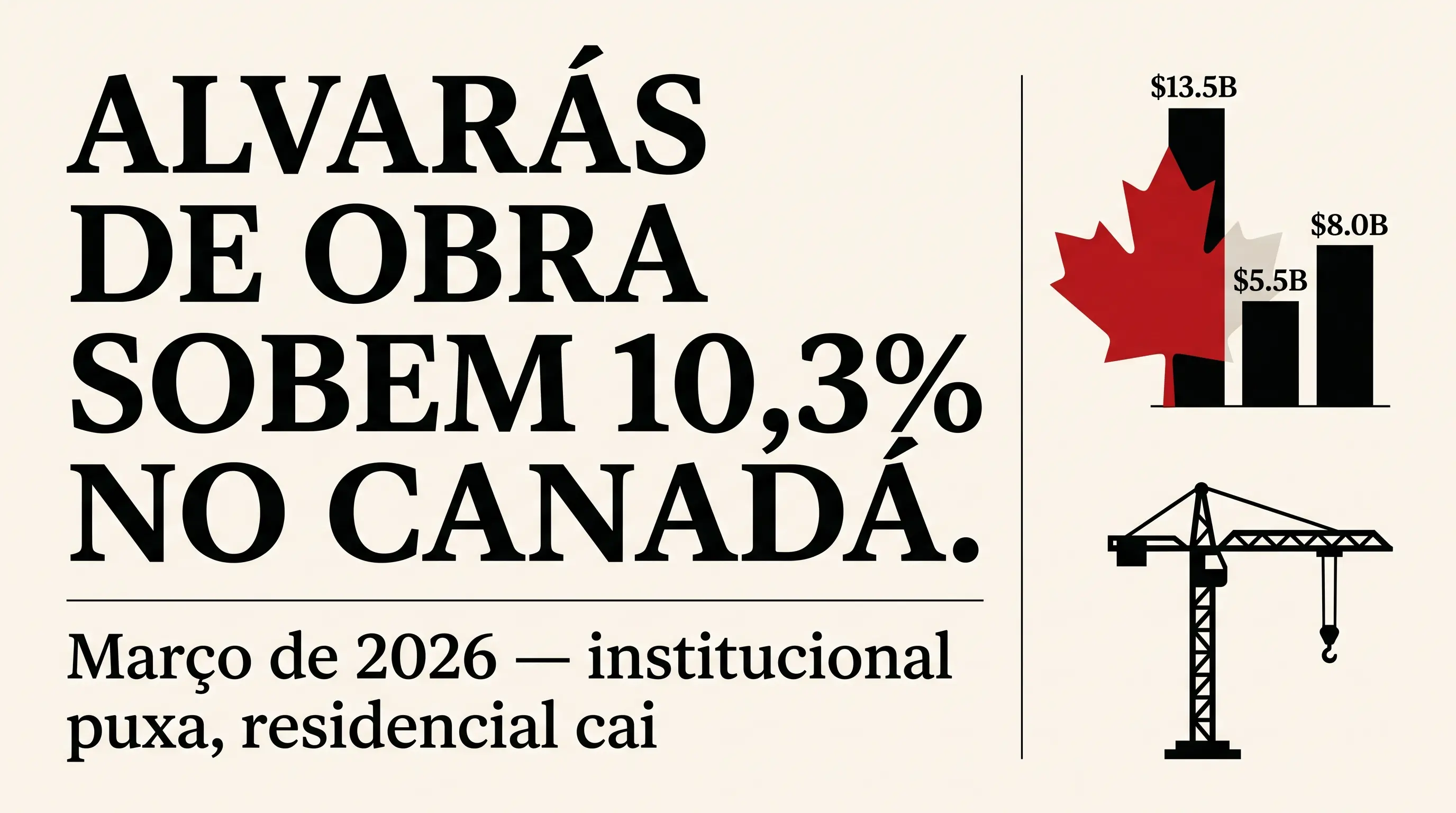
Canada building permits rise 10.3% in March 2026
Canada building permits hit CAD 13.5 billion in March (+10.3%). Vancouver led institutional with a hospital; multi-family fell in ON/QC.