DADOS DO CANADÁ
Canada's GDP stalled in Q1 2026, and the direction is downhill
In this article
Canada's GDP was flat (0.0%) in Q1 2026 after falling 0.2%. Technically not a recession yet, but the economy is losing steam.
The Statistics Canada figures for the first quarter of 2026 dropped on Friday (May 29), and the most important number of the month was the most boring one possible: 0.0%. The Canadian economy did not grow and did not shrink, it stood still. After falling 0.2% in the fourth quarter of 2025, the country spent the first three months of 2026 spinning in place.
The Brazilian press will say “Canada in recession.” By the technical ruler, two straight quarters of decline, it isn’t yet, because the quarter closed at zero instead of negative. But I’ll be honest with you: I don’t buy that “technically not.” The economy taking in Brazilians today isn’t just standing still, it’s moving backwards, and that changes the math for anyone sending out resumes, negotiating salary, or deciding which month to fly out.
Is Canada in a recession?
By the official definition, not yet, and that’s the only good part of the news. A technical recession requires two straight quarters of decline, and Canada was flat (0.0%) after falling 0.2% at the end of 2025. But the technical ruler is one thing; the direction is another. And the direction, to me, is downhill.
Look at the sequence: last quarter shrank, this one stalled, business investment fell 0.7%, and household savings are at their lowest since 2024. It’s not one bad number in isolation, it’s an economy that has been losing traction, leaving the newly arrived immigrant stuck at the front door of the labour market. The “flat” in the headline is the snapshot of an economy that stopped growing, not of one that’s doing well.
Why did total GDP stay flat while GDP per person rose 0.2%?
Because Canada’s population fell. StatCan was direct in the release: GDP per person (per capita) rose 0.2% precisely because the population shrank for the second straight quarter while total GDP came in at 0.0%. When the pie stays the same size and there are fewer people to split it, the slice per person grows, even without the economy actually growing.
This is the detail nobody translates into Portuguese. Over the past few years, Canada’s total GDP grew “wholesale” because hundreds of thousands of immigrants arrived per year, more people, more consumption, more GDP, but the slice per person was falling. Now the film has flipped. The release doesn’t detail the cause of the population decline, but it lines up with the brake on immigration Canada has been applying since 2024, fewer permanent residences approved, fewer temporary residents. For those already here, the upside is short term: fewer people competing for the same rents and the same openings in some cities. But think about what this number really says, a country that shrinks for two straight quarters is a country fewer people are betting on. That’s not how the economy that promised to welcome you with open arms behaves.
What does stalled GDP mean for the labour market?
It means stalled hiring, and, being honest, no sign of improvement in the short term. The data point that best predicts employment is business investment, and it fell 0.7% in the quarter, with investment in engineering structures plunging 4.6% and residential structures dropping 2.0%. A company that doesn’t invest in building, expanding, or equipping doesn’t open new positions. Goods-producing industries, in the March cumulative, fell 0.8%.
For the Brazilian who sent 300, 500 resumes to Toronto or Vancouver and heard silence, this is the macro backdrop. It’s not just your resume, it’s an economy where the average company is holding cash, not hiring. The less-bad side: employee compensation (aggregate wages and benefits) still rose 1.2% in the quarter, so those who are employed didn’t see their pay shrink. The squeeze is at the front door, landing the first job, not for those who already got through it. And until GDP starts growing again, that squeeze won’t loosen, and honestly, I don’t see it turning around in the coming months.
How much are Canadian households managing to save?
Less and less. The household savings rate fell to 3.5% in the first quarter, the lowest since the start of 2024. Household spending rose 0.4% (after 0.7% the previous quarter) and disposable income grew 0.6%, but households are using more than they earn to keep up their standard of living. That’s not a sign of confidence, it’s people stretching the budget because the cost of living gives no relief. Less is left at the end of the month, and the cushion for the unexpected is disappearing.
And there’s a warning sign for anyone who has (or will have) a mortgage: what households pay in interest, mortgage and credit, rose 0.7%, the first increase since the second quarter of 2024. After two years of the Bank of Canada cutting rates, the cost of debt is rising again at the edge. For anyone calculating whether to buy a house in 2026, this is the number to watch closely: the interest-rate wind may be shifting again.
Which sectors dragged the economy down in March?
Oil and mining. In the monthly cut, GDP by industry fell 0.1% in March, giving back part of February’s 0.2% gain, and 8 of the 20 sectors declined. The group of mining, quarrying, and oil and gas extraction fell 2.1%, with oil and gas extraction at -2.0% and coal plunging 13.9%. Construction fell 0.6% and retail, 0.6% too.
Not everything went down. Wholesale trade rose 1.8% and performing arts and sports jumped 6.9% in the month. Services in the aggregate held the line, rising 0.1%. But the snapshot is clear: Canada still relies too heavily on natural resources, and when oil and mining cough, the whole GDP feels it, an economy that hasn’t diversified enough is hostage to the commodity price. For anyone eyeing Alberta or Saskatchewan because of energy-sector jobs, this is a quarter to look at with extra attention.
What does this change for Brazilians living in (or arriving in) Canada?
It changes three concrete things. First: stop waiting for the 2022 market. The economy stalled at 0.0% and companies are cutting investment, hiring is slow and will stay slow until GDP starts growing again. Anyone applying needs patience, a network, and calibrated expectations, not one more job portal.
Second: the population fell for the second straight quarter, that’s what pushed GDP per capita to +0.2%, and fewer people competing for the same housing is what’s been easing rents in cities like Vancouver. Those already here can negotiate a lease with more leverage than two years ago. Third: with household savings at their lowest since 2024 and debt interest rising again, this is not the quarter to stretch the budget. If you can delay buying the car or the house, delay it and reassess when the second-quarter GDP comes out. StatCan publishes this number for free, and following the source directly, before the headline arrives translated and distorted, remains the biggest edge for anyone planning a life here with a cool head. And I’ll be clear about where I stand: I plan for the scenario of an economy that keeps getting worse, not for a recovery nobody guaranteed. If Canada proves me wrong and starts growing again, great, you lost nothing. If I’m right, you arrive prepared instead of surprised.
Where to find the full data?
Both releases are in The Daily of May 29, 2026: Gross domestic product, income and expenditure, first quarter 2026 (income and expenditure) and Gross domestic product by industry, March 2026 (the monthly cut by sector). The next GDP-by-industry data (April) comes out at the end of June, and the second-quarter GDP only in August, I’ll cover both as soon as they’re out.
Frequently asked questions
Is Canada in a recession in 2026?
Why did GDP per person rise if total GDP stayed flat?
Will stalled GDP make it harder to land a job in Canada?
Is it a good time to buy a house in Canada?
When does Canada's next GDP data come out?
Sources
- Statistics Canada, Gross domestic product, income and expenditure, first quarter 2026 (The Daily, May 29, 2026): https://www150.statcan.gc.ca/daily-quotidien/260529/dq260529a-eng.htm
- Statistics Canada, Gross domestic product by industry, March 2026 (The Daily, May 29, 2026): https://www150.statcan.gc.ca/daily-quotidien/260529/dq260529b-eng.htm
Next GDP-by-industry release (April 2026): end of June. Second-quarter GDP: August 2026.
The Vancouver Letter
You made it this far. That tells me something.
The Vancouver Letter is the letter I wish someone had sent me the third time I tried for Canada, when I had no idea what I was doing wrong. Once a week, straight to your inbox. No products, no courses, just what actually works. I got your back.
Get immigration updates
Practical tips straight to your inbox.
Related articles
Retail and employment insurance in Canada in March 2026: the paradox
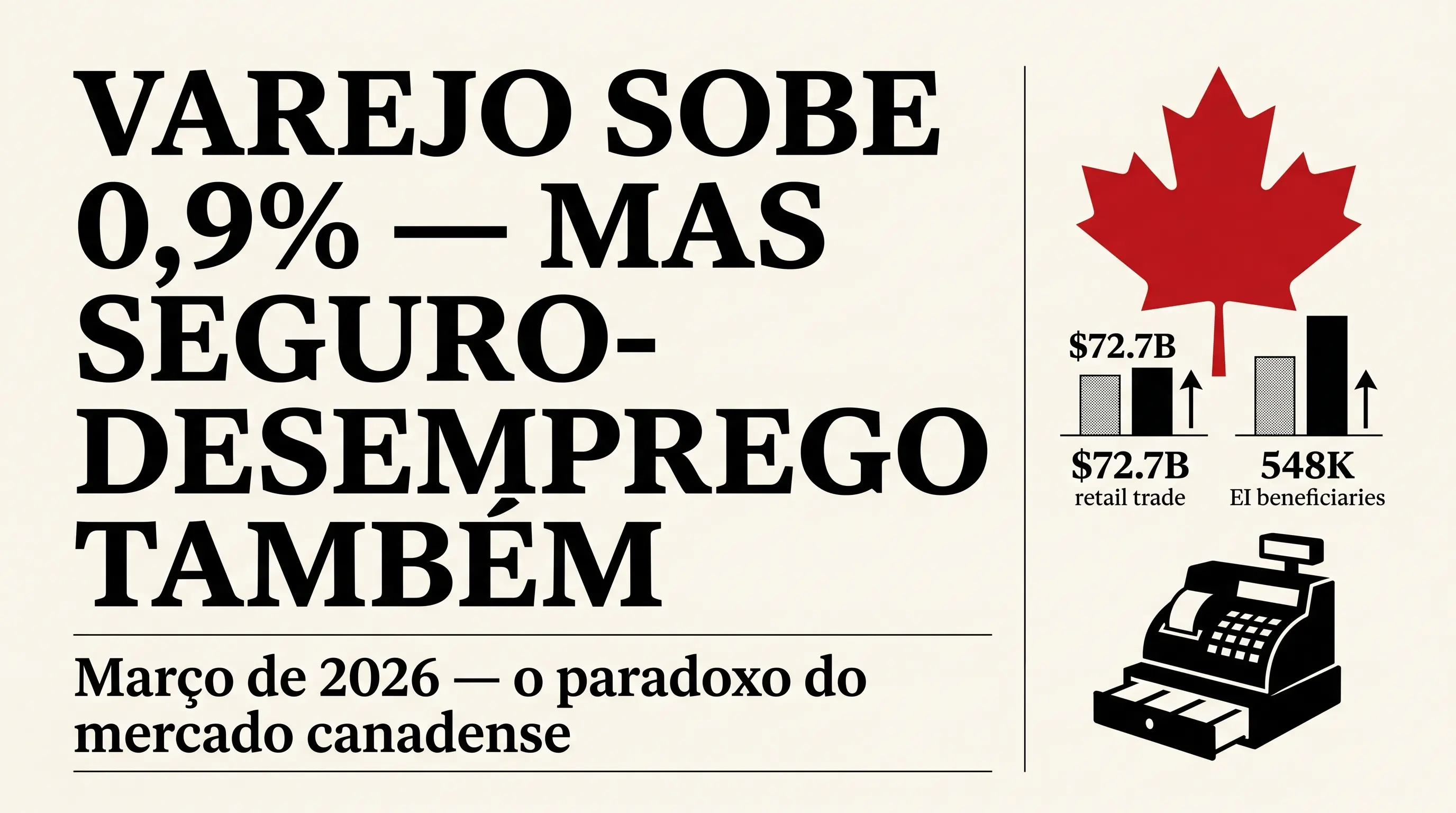
Canadian retail rose 0.9% in March (CAD 72.7B) but excluding gas it fell 0.1%. EI rose 8.7% over 12 months; Ontario leads at +22.2% YoY.
Canada building permits rise 10.3% in March 2026
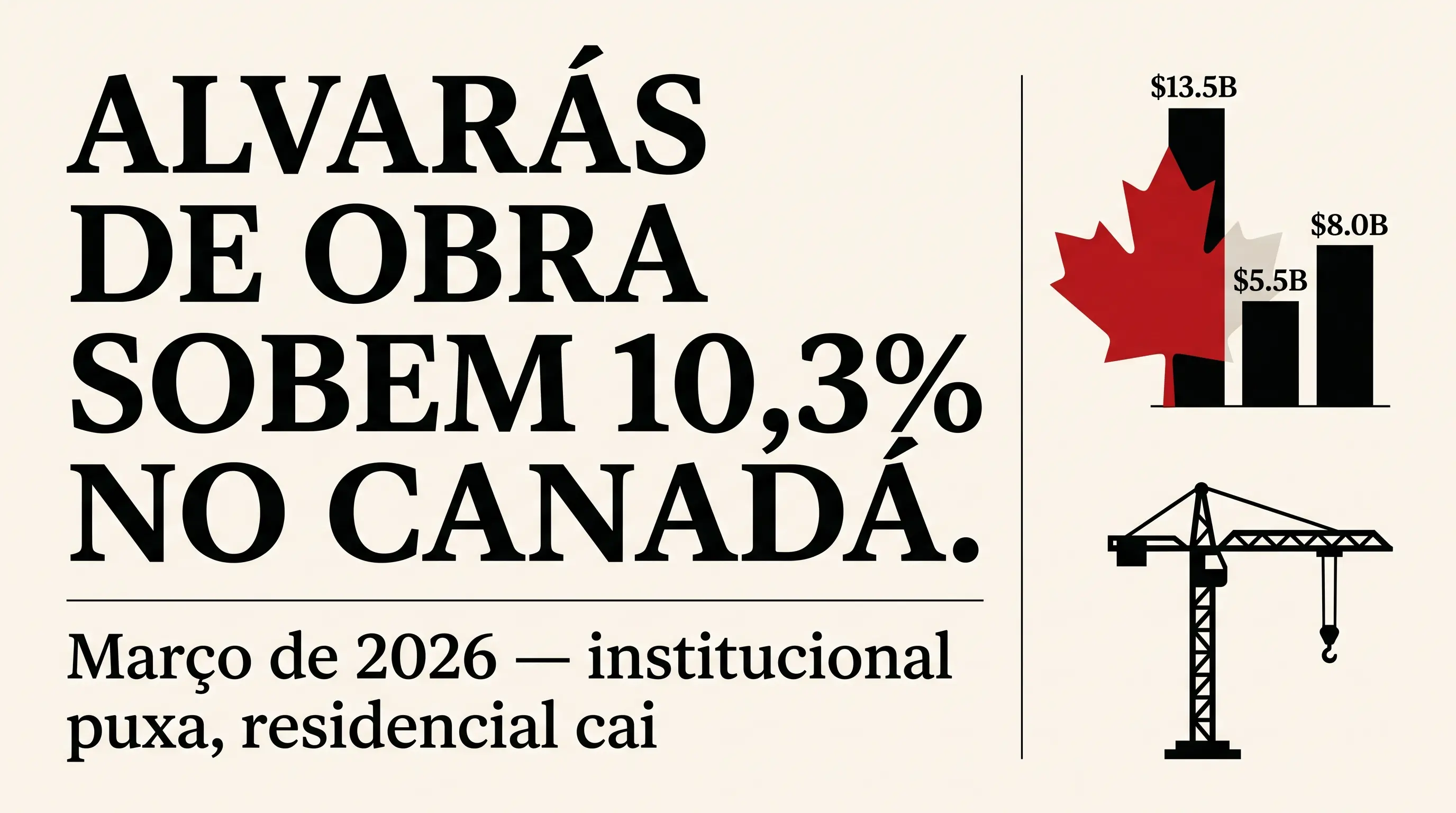
Canada building permits hit CAD 13.5 billion in March (+10.3%). Vancouver led institutional with a hospital; multi-family fell in ON/QC.
Commercial rent in Canada: StatCan's new CRSPI index is now available
StatCan released the CRSPI Q1 2026: commercial rent index for 13 CMAs plus the 4 largest provinces. What it means for a Brazilian who wants to start a business.