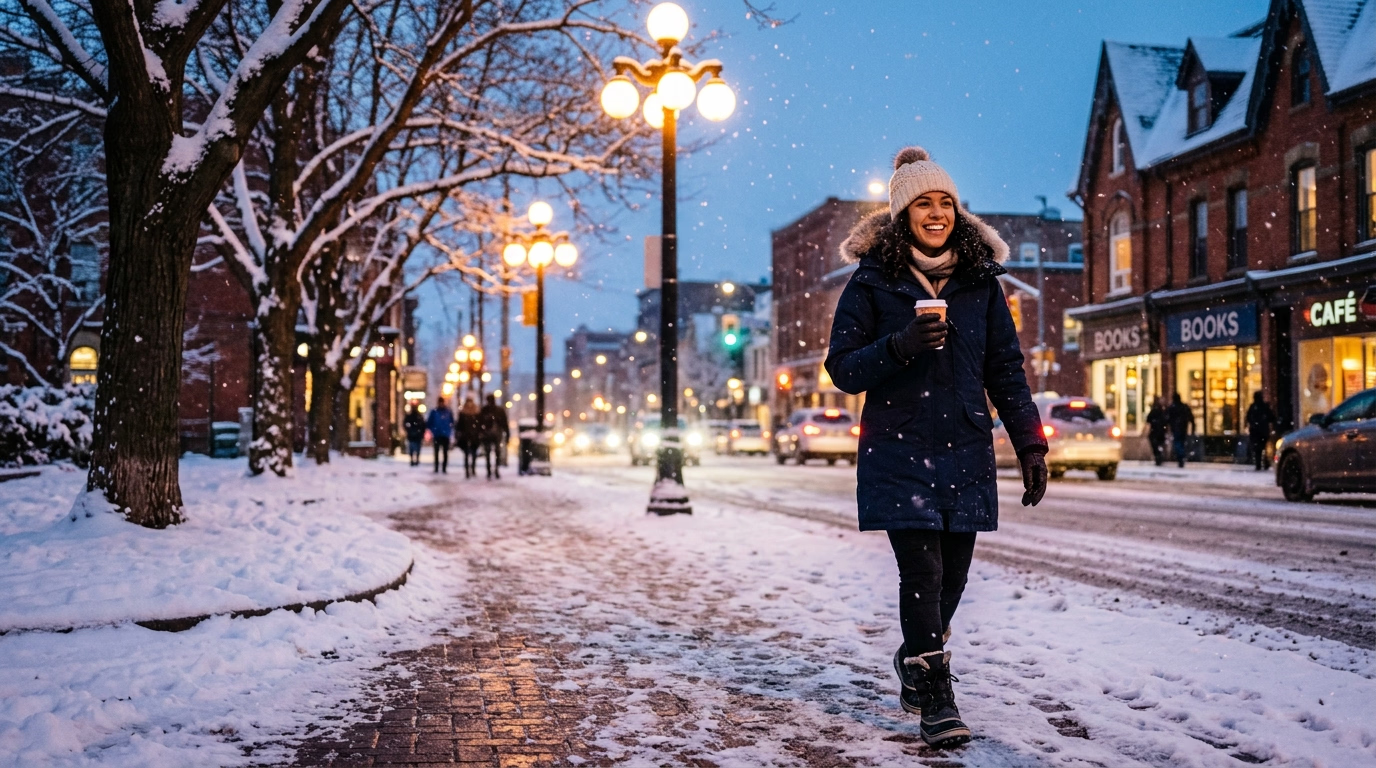
CULTURA E ADAPTAÇÃO
How to survive the Canadian winter: a guide for Brazilians
In this article
Canadian winter: 0°C in Vancouver to -40°C in Winnipeg. A clothing kit costs CAD 300 to 800 (I grabbed North Face at 70% off in an outlet).
SOBREVIVA AO FRIO DO CANADÁ COMO UM VERDADEIRO CANADENSE!
Roupas de frio no Canadá: como gastar menos e ficar aquecido!
ROUPAS DE FRIO NO CANADÁ 🇨🇦: DESCOBRINDO PREÇOS SURPREENDENTES! | Outlet
Man, I thought I knew what cold was. Truly. Back in Brazil, when it hit 15°C in Rio I was already wrapped in a blanket on the couch, complaining like it was the end of the world, with one of those portable heaters nobody knows where it came from cranked to the max. “Wow, it’s freezing!” People, I had NO idea what real cold was.
When I landed in Vancouver in late 2024, it was fall. About 8°C. Me: “No problem, I can handle this.” Then came November. December. January. And that’s when I understood why everyone talks about the Canadian winter with that almost religious respect.
And keep in mind Vancouver has the MILDEST winter in Canada, okay? If I found it rough here, imagine someone moving to Toronto or Montreal. Anyway, this guide is everything I wish I had read before facing my first winter. Because nobody explained it to me properly, and I learned it all the hard way.
How does the Canadian winter work?
First, the facts. Winter in Canada officially runs from December to March, but in practice it can start in October and drag on until April, depending on where you live. And “where you live” makes all the difference.
Here are the temperature ranges you can expect in the main cities:
- Toronto: -5°C to -20°C, with wind chill that can reach -30°C. Moderate snow, plenty of wind coming off the lake.
- Vancouver: 0°C to 5°C. The mildest winter in Canada, but it makes up for it with rain. Lots of rain. MONTHS of nonstop rain. “Oh, this is just a little drizzle”, that’s what I said in the first month. By the fourth straight month of rain, I was at the pharmacy hunting for vitamin D with a look of desperation.
- Calgary: -10°C to -30°C. Dry, intense cold, but with the famous Chinook winds that can raise the temperature by 20°C in a few hours. Alberta is unpredictable.
- Montreal: -10°C to -25°C. Intense cold, lots of snow, and that humidity that gets into your bones. Montreal’s winter is beautiful, but it’s brutal.
- Winnipeg: -20°C to -40°C. That’s right, forty below. Winnipeg competes with Siberian cities for the title of coldest city in the world. That’s not an exaggeration.
Beyond temperature, you need to prepare for accumulated snow, black ice (invisible and treacherous), cutting wind, and maybe the hardest of all: the darkness. In December, the sun sets at 4:30 p.m. You leave work and it’s already night. You wake up in the dark, you come home in the dark. Just 8 hours of daylight a day.
Man, for a Brazilian used to sun all year round, that weighs on you more than the cold. Seriously. I wasn’t prepared for the impact the lack of light has on your mood. There are days you wake up and it feels like your motivation stayed asleep under the covers and refuses to get up.
How to build a winter wardrobe in Canada?
Alright, now let’s talk clothes. Forget the concept of cold-weather clothing you had in Brazil. That “thick” coat you wore in Campos do Jordão or the Serra Gaúcha (Brazil’s chillier mountain towns)? That works for October here. In January, it’s a glorified t-shirt.
In Canada, the keyword is layers (layering). And I learned that after leaving the house with a single layer and almost turning into a popsicle.
The layering system
- Base layer (first layer): Thermal clothing that sits against the skin. Merino wool is the gold standard, it regulates temperature, doesn’t hold odour, and dries fast. Cheaper alternative: synthetic (polyester). Uniqlo Heattech is popular and affordable.
- Mid layer (middle layer): Fleece or down jacket. Its job is to retain your body heat. A good fleece from Columbia or North Face does the trick.
- Outer layer (outer shell): A waterproof, windproof parka. This is the most important piece and where it’s worth investing. Brands like Canada Goose are famous (and ridiculously expensive), but Helly Hansen, North Face, and Columbia get the job done for less.
My adventure buying winter clothing
Man, when I arrived I had NOTHING in the way of winter clothing. Zero. I came from Brazil, right? My thickest coat was a jean jacket. A jean jacket. In Canada. I know.
So I did what every Brazilian does: hunt for deals. And let me tell you, outlets here in Canada are on another level. I went with some friends to the outlet and it was like a military shopping operation.
The most insane find: a North Face jacket at 70% off. Seventy percent, man. A jacket that normally costs CAD 300 to 400 I got for a fraction of the price. I almost cried in the fitting room. My friends were like “Caio, relax, it’s just a jacket.” No, it is not just a jacket. It’s survival. And at 70% off it’s survival with style.
The golden tip I give everyone: buy winter clothing at the end of the season (March/April). The sales are absurd, 50 to 70% off everything. Buy for next year and thank yourself in November. I have a video about this on the channel if you want to see the prices live.
Winter boots
Don’t try to face winter in sneakers or regular boots. You need insulated, waterproof boots with traction. Brands like Sorel, Kamik, and The North Face are the benchmark. The sole needs to handle ice without slipping. Investing in good boots is investing in your safety, slipping on ice and falling is more common than you think. I’ve already slipped about 3 times. One of them in front of a whole line of people waiting for the bus. The embarrassment is temporary, but the bruised shin lasts weeks.
Essential accessories
- Toque: The Canadian word for a beanie. Cover your ears, always. A frozen ear is a specific kind of pain I wouldn’t wish on anyone.
- Insulated gloves: Forget thin fabric gloves. You need thick gloves, ideally waterproof. For -20°C days, consider mittens (gloves with no finger separation), they keep you warmer.
- Scarf or neck warmer: Protects your neck and face from the wind. A fleece neck warmer is practical and efficient.
How much does it cost to build a winter wardrobe?
Be ready to spend between CAD 300 and 800 for a complete kit (parka, boots, base layers, accessories). Yes, it’s a heavy investment. But if you’re smart with outlets and sales like I was, you can easily cut that in half. And it lasts for years if you take good care of it.
Where to shop (without going broke)
- Winners/Marshalls: Quality brands at a discount. It’s the best value for winter clothing. I go there religiously.
- Canadian Tire: For practical accessories, snow shovels, ice scrapers, survival items for the car.
- Value Village: Thrift store. You’ll find CAD 500 parkas for CAD 40. Seriously. It’s not a joke.
- Outlets: If there’s an outlet near you, go. Go ready to spend, but go. It’s where I found my best pieces. North Face, Columbia, Helly Hansen, all at absurd discounts.
How to heat your home in the Canadian winter?
One of the perks of living in Canada is that houses and apartments are built for winter. Central heating (gas furnace or electric) is standard. You won’t be cold inside your home, as long as you’re willing to pay the bill.
The cost of heating in winter ranges between CAD 100 and 250 per month, depending on the size of the home, the type of heating, and the province. To save:
- Program the thermostat: Lower it to 18°C when you go out and when you sleep. Each degree lower saves about 3% on the bill.
- Seal windows and doors: Draft stoppers (rolls for under the door) cost CAD 5 to 10 and make a real difference.
- Keep it between 20 and 22°C when you’re home. That’s the sweet spot between comfort and savings.
Something I found out the hard way: my apartment here in Vancouver has a balcony, which, by the way, is a rarity here. I love my balcony. But in winter, that sliding door lets in an icy draft if it isn’t well sealed. I had to buy those draft stoppers and it made an absurd difference on the bill. Now I’m already planning to buy a barbecue for the balcony when summer arrives. A Brazilian and a barbecue, right? There’s no way around it.
One item Brazilians ignore and shouldn’t: the air humidifier. Central heating dries out the air brutally. Without a humidifier, you’ll get cracked skin, bleeding lips, a dry nose, and an irritated throat. A basic humidifier costs CAD 30 to 50 and completely changes your quality of life in winter.
How to get around in the Canadian winter?
Driving in the snow
If you have a car, winter tires are essential. In Quebec, they’re mandatory by law from December 1 to March 15. In the other provinces they aren’t mandatory but are highly recommended, your insurance might even give you a discount if you use them. A set of winter tires costs between CAD 400 and 800, including installation.
Learn about black ice: it’s a thin, transparent layer of ice on the asphalt that is practically invisible. It’s responsible for an absurd number of accidents. Drive slowly, keep your distance, and brake gently. If the car starts to skid, don’t brake sharply, take your foot off the accelerator and keep the wheel steady in the direction you want to go.
Always keep in the car: an ice scraper, a small shovel, an emergency blanket, and jumper cables. Batteries die in extreme cold, it’s almost a rite of passage.
Public transit
It runs normally for most of the winter, but expect delays during storms. In Vancouver, the SkyTrain is pretty reliable even in the rain (and rain here is the default, not the exception). Buses can be 10 to 20 minutes late on bad days. Your city’s transit app is your best friend, here I use TransLink and it’s a lifesaver.
Walking
Walking on ice is a skill you’ll develop. The real technique (no joke): walk like a penguin. Short steps, feet slightly turned out, weight leaning slightly forward. This distributes your balance better and reduces the risk of slipping. It looks ridiculous, it actually works.
I know because I didn’t follow this tip at first and I fell. More than once. Learn from my mistakes, please.
Snow removal
Cities clear the streets with plows and salt. But if you live in a house (not an apartment), the sidewalk is your responsibility. Clearing the snow in front of your house is mandatory in many cities, and if someone slips on your sidewalk, you can be held liable. A good snow shovel costs CAD 20 to 50. Make it your morning workout (because it will be).
How to take care of your mental health in winter?
Man, this is the most important topic in this whole guide. And I need to be real here.
SAD (Seasonal Affective Disorder) is a real, clinically recognized condition caused by the lack of sunlight. It affects millions of Canadians every winter, and Brazilians are especially vulnerable because we come from a country where sun is the norm all year round. Our bodies are simply not prepared for months with little light.
In Vancouver, SAD shows up differently than in eastern Canada. It’s not the extreme cold that knocks you down, it’s the constant rain. Months of grey skies without seeing the sun. There was a week when I’d wake up, go to work, come back, sleep, all in grey. It felt like the sun had gone on vacation and forgotten to tell anyone.
The symptoms include: constant fatigue, difficulty concentrating, low mood, irritability, an excessive craving for carbs, trouble getting out of bed, and a huge urge to isolate yourself. If that sounds like you, know that it’s not weakness and it’s not you being soft. It’s biochemistry, your body produces less serotonin and more melatonin when it doesn’t get enough light.
What helps (and I speak from experience):
- Vitamin D: Supplementation is practically mandatory in the Canadian winter. Talk to your doctor, but doses of 1,000 to 2,000 IU/day are common. Health Canada recommends supplementation for everyone during winter. I take it every day, religiously.
- Light therapy lamps (SAD lamps): Lamps that emit 10,000 lux and simulate sunlight. Use for 20 to 30 minutes in the morning. They cost between CAD 40 and 80 on Amazon or at Canadian Tire. They make a real difference.
- Physical exercise: Keeping your body moving is one of the best natural antidepressants. Gyms get packed in winter for a reason.
- Community and social life: Don’t isolate yourself. I know the couch and Netflix are tempting when it’s raining for the 47th time in a row, but staying in touch with people is fundamental. For me, church was my anchor, it’s where I found friends, support, even a job and apartment lead. Everyone has their own space, but finding a community where you feel welcome makes ALL the difference. If it’s not church, it can be sports, a hobby group, volunteering, anything that gets you out of the house and connects you with people.
- Professional help: If the symptoms are intense, see a doctor or therapist. Canada has mental health resources, and many health plans cover therapy. Don’t wait to ask for help. I mean it. It’s not you being soft.
What activities can you enjoy in the Canadian winter?
The secret to surviving winter isn’t just protecting yourself from it, it’s learning to enjoy it. It took me a while to understand that, but it’s true.
- Ice skating: Many cities have free outdoor rinks. Toronto has Nathan Phillips Square, Ottawa has the Rideau Canal (the largest skating rink in the world). Skate rentals cost CAD 10 to 15. In Vancouver there’s Robson Square, I went and fell about 15 times, but it was a blast.
- Skiing and snowboarding: Resorts like Mont Tremblant (Quebec), Whistler (BC), and Blue Mountain (Ontario) offer day passes starting at CAD 80 to 120. Whistler is 2 hours from Vancouver and is considered one of the best in the world. Worth it at least once in your life.
- Snowshoeing and cross-country skiing: More accessible than alpine skiing and excellent exercise. Many parks offer free trails.
- Christmas markets: Christmas markets are magical. Toronto, Vancouver, and Quebec City have the best ones. Food, crafts, lights, and lots of mulled wine. The Vancouver Christmas Market at Queen Elizabeth Park is gorgeous.
- Hot chocolate culture: Discover the local cafés and their artisanal hot chocolates. It’s a small pleasure that makes winter worth it.
- Movie and series marathons: When it’s been raining for the 30th day straight (Vancouver, I’m looking at you), staying home with a blanket, popcorn, and a new show isn’t laziness, it’s survival. Zero guilt.
- Hygge: The Danish concept of cosiness. Candles, blankets, hot drinks, books, silence. The Scandinavians invented this for a reason, and it works.
What mistakes do Brazilians make in their first winter?
After living through my first winter and talking to dozens of Brazilians, I can say with confidence that we make the same mistakes:
- Buying a good-looking coat instead of a warm coat. That stylish trench coat? It works for October. In January, you want the parka that looks like a walking sleeping bag. Fashion in winter is secondary to survival. I know because I bought a “stylish” coat first and had to go back to the outlet to buy a real one a week later.
- Thinking “one thick coat” replaces layers. It doesn’t. The layering system exists for a reason: the air between the layers acts as insulation. One thick layer is less efficient than three thinner layers.
- Running to the car in flip-flops to “grab something real quick.” Don’t do this. The sidewalk is wet or icy. You’ll slip, fall, and regret it. Put your boots on. Always.
- Ignoring the wind chill. The weather app says 2°C and you think “I can handle that.” But with Vancouver’s wind and rain, it feels like -5°C, and you find that out when the wind hits your face along with droplets of icy rain. Always check the feels-like temperature, not just the temperature.
- Not taking vitamin D. “Oh, I eat well, I don’t need it.” Yes, you do. Almost everyone in Canada is vitamin D deficient in winter. Especially in Vancouver, where the sun hides for months. Take the supplement. It’s not optional.
The good side of winter
After so many warnings, I need to be fair: the Canadian winter has genuinely beautiful things. And I say this as someone who went from “I hate the cold” to “okay, maybe the cold has its moments.”
The first snow is magical. When snow fell in Vancouver, which is rare, by the way, I acted like a kid. I went out on the balcony (the one I mentioned, my pride and joy), filmed everything on my phone, sent it to my whole family. My mom thought I was at the North Pole. No matter how many winters you go through, when those flakes start falling slowly, covering everything in white, it’s a cinematic moment.
Christmas in Canada looks like a movie. Lights on the houses, decorated trees, real snow (sometimes), a lit fireplace. If you grew up watching American Christmas movies and thought it was fantasy, here it’s real. I’m thankful I got to live that.
The appreciation for summer is something only those who go through winter understand. When spring arrives and you feel the warm sun on your face for the first time in months, it’s almost spiritual. Canadians make the most of every second of summer because they know the price they paid for it. And you’ll do the same. I’m already counting down the days to summer so I can use my balcony and throw a little barbecue.
Hot drinks take on a new meaning. A coffee, a tea, a hot chocolate, in real cold these things warm your soul, not just your body. It’s a simple pleasure that multiplies by ten when the temperature is low and the rain won’t stop.
And maybe the most important: you get stronger. Surviving the Canadian winter as a Brazilian is an achievement. You develop a resilience you didn’t know you had. When spring arrives, you look back and think: “I made it.” And that changes something inside you.
Winter passes
The Canadian winter is long, grey, and challenging. For a Brazilian, it’s one of the hardest adaptations of immigration, sometimes harder than the language or missing home. But it passes. It always passes.
And when spring arrives, when the rain gives you a break and the sun reappears, shy, when Vancouver’s cherry blossoms explode in pink and people come out of their homes smiling like they’ve been set free, man, you’ll feel invincible. Because you survived. And you’ll survive again.
I survived my first winter. I won’t lie and say it was easy. There were hard days. But with the right community, with faith, and with a good North Face jacket from the outlet at 70% off, you can face it.
If you’re planning to immigrate and want to understand more about adapting, read about the culture shock that surprises Brazilians in Canada. To decide where to live, check out our guide to the best cities in Canada for Brazilians. And if you want to understand how much all of this costs, we have a complete article on the cost of living in Toronto in 2026.
Get your coat ready. It’ll be worth it. I got your back.
Frequently asked questions
Which city has the mildest winter in Canada?
How much does it cost to build a winter wardrobe in Canada?
Where can you buy cheap winter clothing in Canada?
What is SAD and how do you avoid it?
Are winter tires mandatory in Canada?
The Vancouver Letter
You made it this far. That tells me something.
The Vancouver Letter is the letter I wish someone had sent me the third time I tried for Canada, when I had no idea what I was doing wrong. Once a week, straight to your inbox. No products, no courses, just what actually works. I got your back.
Get immigration updates
Practical tips straight to your inbox.
Related articles
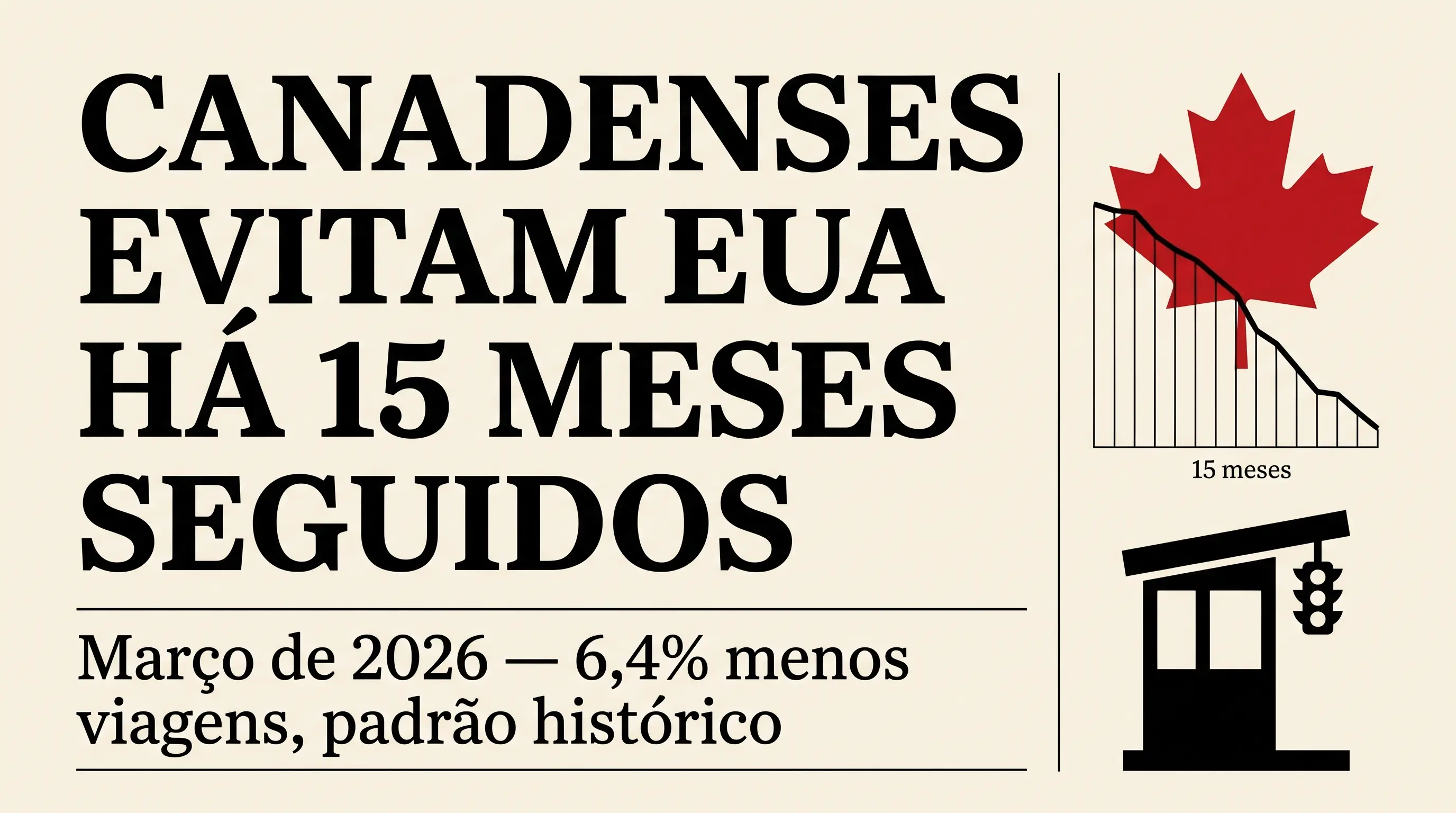
Canada-US travel in March 2026: 15th straight month of decline
Canadians made 6.4% fewer trips to the US in March, 15 straight months of decline. Brazilian visitors to Canada dropped too. Politics matters.
VPN in Canada: Globoplay, Brazilian banking, and public Wi-Fi
How a VPN works in Canada for three scenarios: watching Globoplay, opening your Brazilian bank app, and securing public Wi-Fi, and where it fails.
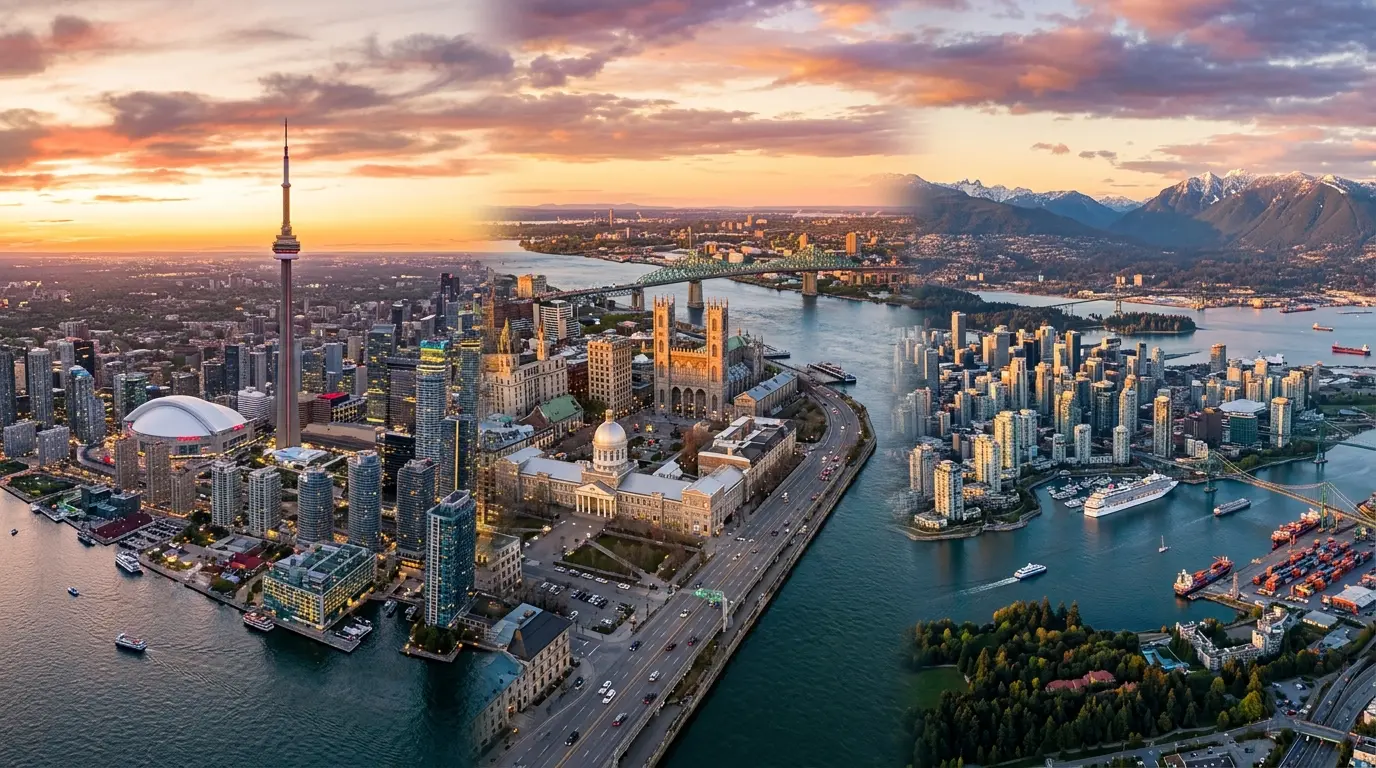
Best Cities in Canada for Brazilians: Where Should You Live?
Monthly cost: Calgary CAD 3,361, Toronto CAD 3,797, Vancouver CAD 4,194 (1BR suburb). Complete guide to 8 Canadian cities for Brazilians.