NOTÍCIAS
Canada Is Creating a New PR Program, and the Government Already Published the Template
In this article
A Canadian immigration lawyer revealed that a new PR program is being created. I dug into it and found the source in IRCC documents.
A few weeks ago, a Canadian immigration lawyer said this on a live stream:
“What I’m going to tell you now is that there’s a new permanent residence program being created, a real program. I’ll have a lot more information next month about this program and what it’s going to look like. Why do we know what it’s going to look like? Because the government published the initial template in the regulations to explain how this program is going to work.”
And he made it clear: this is not the TR to PR program with 33,000 spots.
I heard that and went straight to the official documents.
What I found: IRCC’s Forward Regulatory Plan
The “template” the lawyer mentioned is almost certainly IRCC’s Forward Regulatory Plan, an official Canadian government document that lists planned regulatory changes for the next 2 to 3 years, before they are finalized.
This document is not secret. It is published on the Government of Canada website. Most people have never heard of it.
What the Forward Regulatory Plan is, in plain terms
It is an advance notice. When IRCC is planning to create a new program or change a regulation, it publishes the outline here, the structure, the intent, the legal authority, months or even years before launch. It is what an immigration lawyer calls a “template in the regulations”: the program’s architecture is already documented in regulatory language, but the final criteria have not been published yet.
When a new entry appears in the Forward Regulatory Plan, it is a sign that the legislative process has already started. It is not speculation, it is official notice.
What the Forward Regulatory Plan says
There is a specific entry in the Forward Regulatory Plan 2026–2028 that matches exactly what the lawyer described:
“Regulations amending the IRPR to modernize the federal skilled worker classes”
What that entry says, in direct terms:
- IRCC is proposing to introduce a new federal immigration class with simplified eligibility requirements
- The current programs, Federal Skilled Worker (FSW), Canadian Experience Class (CEC) and Federal Skilled Trades (FST), will be repealed and replaced by this new class
- The new class will have its own selection criteria defined in formal regulation within the IRPR (Immigration and Refugee Protection Regulations)
These three programs are the pillars of the current Express Entry. Repealing all three and creating a unified replacement is a structural change to Canada’s economic immigration system, not a cosmetic update.
Why this is not the TR to PR program with 33,000 spots
This distinction matters. The lawyer was explicit about it, and I need to be too.
The TR to PR program, the In-Canada Workers Initiative announced in Budget 2025, is a one-time measure: prioritizing the approval of up to 33,000 PR applications already in the system. It does not open a new portal. It does not create a new regulatory class in the IRPR. It is a processing instruction. (I wrote about it here.)
What is being planned in the Forward Regulatory Plan is different:
| TR to PR (33k) | New planned program | |
|---|---|---|
| Type | One-time processing measure | New permanent regulatory class |
| Creates a new portal? | No | Yes (when launched) |
| Changes the IRPR? | No | Yes |
| Current status | Announced, not launched | In regulatory consultation |
What is happening now (May 2026)
IRCC opened public consultations on Express Entry reform in April and May 2026. In April, CIC News reported that Canada is planning to retire the current Express Entry programs and launch a replacement system with different selection logic, more weight on earning potential and employment outcomes.
The program does not have a launch date yet. The eligibility criteria have not been published yet. But the legislative process has already started, and the “template” exists exactly where the lawyer said it was.
What this changes now, in practice
For anyone in the Express Entry process today: nothing changes operationally. Draws keep happening. FSW, CEC and FST still exist. There is no need for immediate action.
For anyone planning to immigrate in the next 1 to 3 years: it is worth following closely. The system you will use may be different from what exists today, with reorganized criteria and, possibly, a selection logic that values different things.
This is Part 1 of a 3-article series. Keep reading:
The Vancouver Letter
You made it this far. That tells me something.
The Vancouver Letter is the letter I wish someone had sent me the third time I tried for Canada, when I had no idea what I was doing wrong. Once a week, straight to your inbox. No products, no courses, just what actually works. I got your back.
Get immigration updates
Practical tips straight to your inbox.
Related articles
How Canada's new PR program will work: what we already know
What will replace Express Entry in Canada: a unified new federal class, the likely criteria, and what the 2026 consultations have revealed so far.
Canada's New PR Program: Answers to the Most Common Questions
When does the new PR arrive? Is Express Entry still worth it? What to do now? Direct answers about the 2026 reform of Canada immigration system.
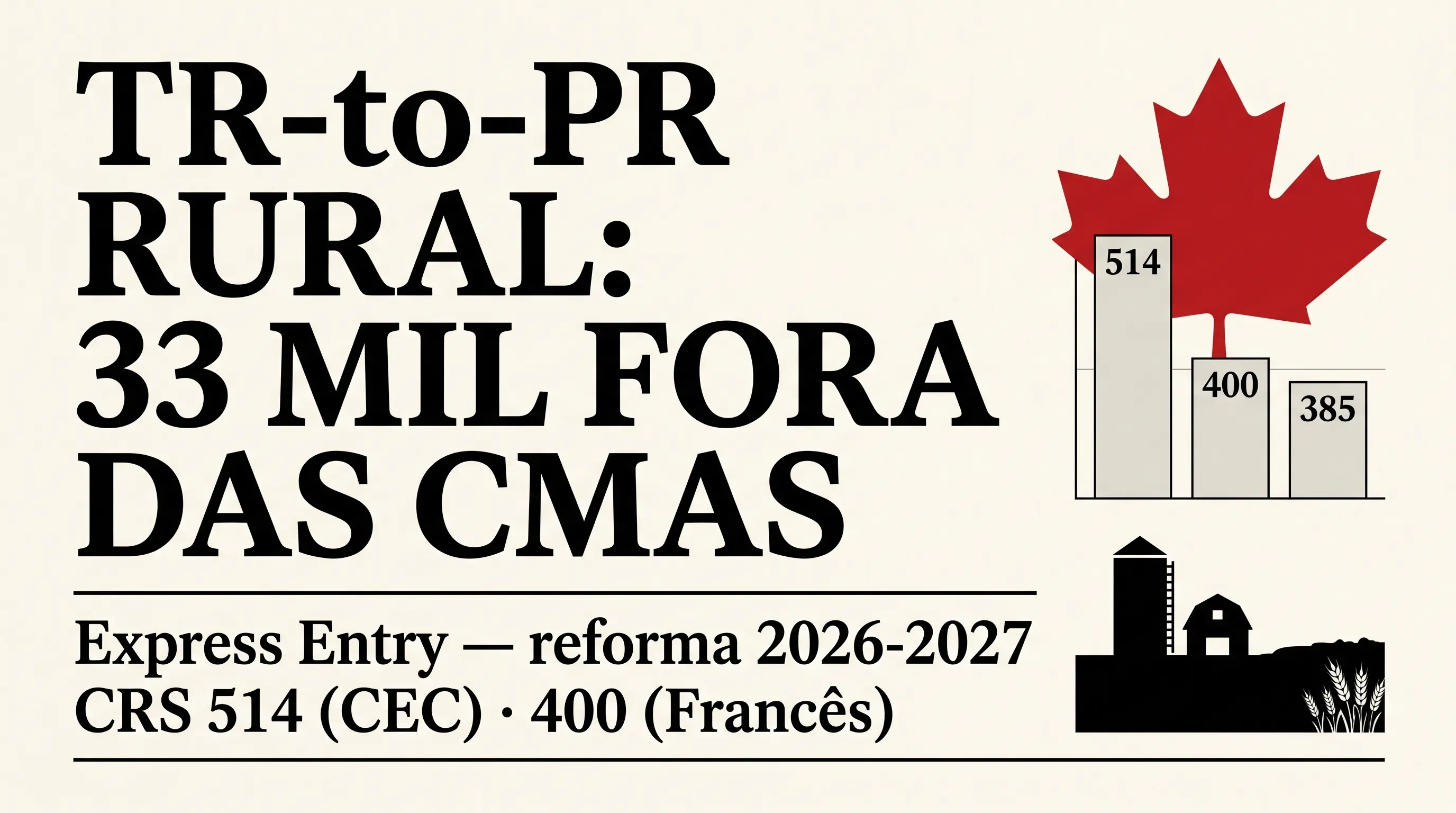
Ep 510: Express Entry, rural TR-to-PR and CRS 514 [Canadian Immigration Institute]
Ep 510 of the Canadian Immigration Institute (April 30, 2026): rural TR-to-PR for 33,000, CEC at CRS 514, French draw at 400, Express Entry reform.