CUSTO DE VIDA
Inflation in Canada in April 2026: why CPI rose to 2.8%
In this article
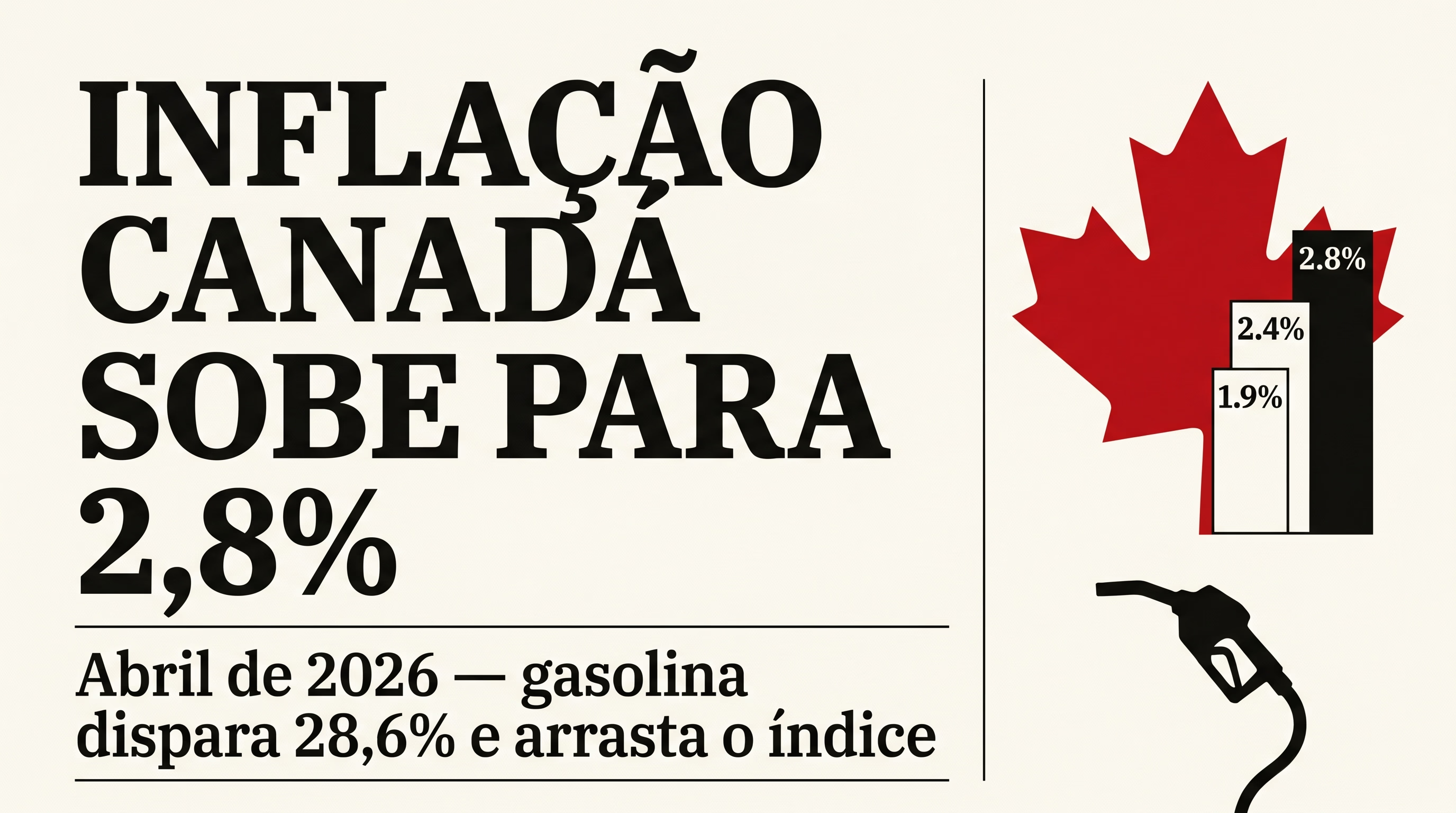
CPI rose to 2.8% in April 2026 (was 2.4% in March). Gas jumped 28.6% and dragged everything up. Rent slowed, and in BC even more.
StatCan dropped the April 2026 CPI this week and the number came in at 2.8% over 12 months. In March it had landed at 2.4%. At first glance it looks like a scare: it jumped 0.4 of a point in a single month. But there is a statistical trap behind it, and anyone living here in Canada needs to understand what happened before yelling that everything got more expensive.
The truth is the increase came almost entirely from gasoline, which rose 28.6% over 12 months, more than five times the 5.9% it had been running in March. Take gas out of the math and inflation went from 2.2% in March to 2.0% in April. In other words: in your life outside the gas station, prices slowed down. But the pump hit the wallet of anyone who drives, and it hits twice as hard for the recently arrived immigrant who bought a car to escape expensive public transit.
How much did inflation rise in Canada in April 2026?
CPI rose 2.8% over 12 months to April 2026, against 2.4% in March, an acceleration of 0.4 percentage point in a single month. For the month alone, April closed at +0.4% (+0.3% seasonally adjusted). It is the highest level since the start of the year, but still inside the 1 to 3% band the Bank of Canada targets. Almost all of the acceleration comes from gasoline (+28.6%), fuel oil (+41.3%) and the base effect of the carbon charge that disappeared from the calculation.
Canada started 2026 with inflation easing: 1.9% in January, 2.3% in February, 2.4% in March. April broke that streak because of an accounting detail I’ll explain in a moment, not because the economy decided to accelerate out of nowhere.
Why did gasoline rise 28.6% if I don’t feel it at the pump?
Gasoline rose 28.6% over 12 months because StatCan compares April 2026 with April 2025, and on April 1, 2025 the federal government removed the consumer carbon levy, knocking down the price of fuel that month. That “dip” dropped out of the 12-month window in this release, so the index goes back to comparing April 2026 with an April 2025 that no longer had the subsidy. It is a base effect, not new inflation.
On top of that accounting effect came two real pushes: the war in the Middle East lifted the international price of oil, and the switch to the summer blend (more expensive) took effect. The only relief was the temporary suspension of the federal fuel tax that started on April 20. But the net was still 28.6% above the prior year. Anyone driving every day in Vancouver, Toronto or Calgary felt it, and anyone going to Costco to fill the tank watched the card max out faster.
And fuel oil, which a lot of people in Ontario, Quebec and the Maritimes use to heat their homes? +41.3% over 12 months. Same logic as international oil, same conflict pushing prices up. Anyone renting a house with oil heating is already seeing the bill climb.
What happened with rent?
National rent rose 3.6% over 12 months in April, slowing from 4.2% in March, the first piece of good news for tenants in months. Even so, the StatCan release makes it clear that rent accumulated a 30.8% increase between April 2021 and April 2026 across all of Canada. Anyone who arrived in 2021 and renewed their lease every year saw rent eat almost a third more of their salary in five years.
The slowdown has a name: new supply coming online in some cities, interest rates still at an elevated level holding back demand, and, in British Columbia specifically, a population that shrank for four consecutive quarters (yes, BC lost people on net). Fewer people competing for the same apartments brings down the pace of increases.
For a Brazilian arriving in 2026, the scenario is less brutal than 2022 to 2023, but rent is still the biggest line in the budget. A 1-bedroom on the open market in Vancouver today runs between CAD 2,300 and 2,500/month; in Toronto, between CAD 2,200 and 2,800. Anyone getting a lower price is taking a direct referral from a landlord, not a Craigslist ad, and that is community network, not market.
How did BC stand out from the rest of Canada?
British Columbia was the only province where inflation did NOT accelerate in April, holding at 2.5% over 12 months, same as March, while the other nine rose. And rent in BC slowed more than anywhere else in the country: +3.4% in April, against +6.4% in March. In one month, the rate fell almost by half. StatCan’s own explanation: BC’s population declined for four consecutive quarters, and it is the first province to feel that at the rent level.
For anyone living in BC, this data point is worth reading slowly. The province’s housing market has always been described as “it will go up forever.” But when the immigration inflow drops (fewer approved permanent residences plus a fall in international study permits), the pressure on rent eases. It does not mean it will fall; it means it stopped exploding.
By contrast, Quebec rose to +3.0% (from +2.9% in March) and is going against the other provinces because it already had its own cap-and-trade system for carbon, so it did not feel the base effect of removing the consumer carbon levy. Quebec inflation is a separate spreadsheet; anyone living in Montréal needs to look at the specific release, not the national number.
What does this mean for a Brazilian living in Canada?
It means three concrete things. First: the headline number of 2.8% is frightening on the first read, but if you don’t drive every day and don’t heat your home with fuel oil, your real inflation was closer to 2.0%. Look at what weighs in YOUR basket before panicking. Second: rent is easing, especially in BC. If your lease is renewing in the next few months, it is worth negotiating; landlords also read the StatCan release, and the “the market is up 6%” justification doesn’t hold anymore.
Third: the divergence between Quebec, BC and the rest of Canada is the story nobody puts in the headline. Canada has five different “inflations” happening at the same time, and making a city decision based only on the national CPI is shortsighted. Anyone living in BC has one reality (rent braking, population shrinking); anyone thinking about Toronto needs to look at Ontario separately (+1.4% at retail, EI +22.2% over 12 months); anyone thinking about Alberta needs to look at Alberta separately again.
And it is worth noting: StatCan publishes these numbers for free, every month, and nobody translates them into Portuguese. Following the source directly is a real edge. The gas pump rises before your salary adjusts; you need 4 to 6 weeks of lead time to fit it into the budget.
Where can you find the full data?
The full release is at The Daily, Consumer Price Index, April 2026. StatCan also keeps a Personal Inflation Calculator that lets you enter your real spending and calculate YOUR inflation, not that of the “average Canadian.” It is worth doing.
The next CPI release comes out on June 22, 2026, with May data. And heads up: in that release StatCan will debut new basket weights based on 2025, so the historical comparison will have a methodological adjustment that is not “prices rising or falling”; it is the index changing what it measures. I’ll cover the May release as soon as it lands.
Frequently asked questions
Does 2.8% inflation mean everything got 2.8% more expensive?
Why is rent still rising if overall inflation is at 2.8%?
Why was Quebec the only province with inflation moving differently?
Will the Bank of Canada change interest rates because of this number?
Why does StatCan publish April data in May? Is it late?
Sources
- Statistics Canada, Consumer Price Index, April 2026 (The Daily, May 19, 2026): https://www150.statcan.gc.ca/daily-quotidien/260519/dq260519a-eng.htm
- Personal Inflation Calculator (StatCan): https://www150.statcan.gc.ca/n1/pub/71-607-x/71-607-x2020015-eng.htm
- Bank of Canada, key interest rate: https://www.bankofcanada.ca/core-functions/monetary-policy/key-interest-rate/
Next CPI release: June 22, 2026 (May data, with new basket weight methodology).
The Vancouver Letter
You made it this far. That tells me something.
The Vancouver Letter is the letter I wish someone had sent me the third time I tried for Canada, when I had no idea what I was doing wrong. Once a week, straight to your inbox. No products, no courses, just what actually works. I got your back.
Get immigration updates
Practical tips straight to your inbox.
Related articles
Rent in Canada fell: the official Q1 2026 numbers, city by city
Average asking rent for a 2-bedroom in Canada fell 0.9% to CAD 2,150. Vancouver, Toronto, Calgary and Halifax, with the official StatCan data.
Canada building permits rise 10.3% in March 2026
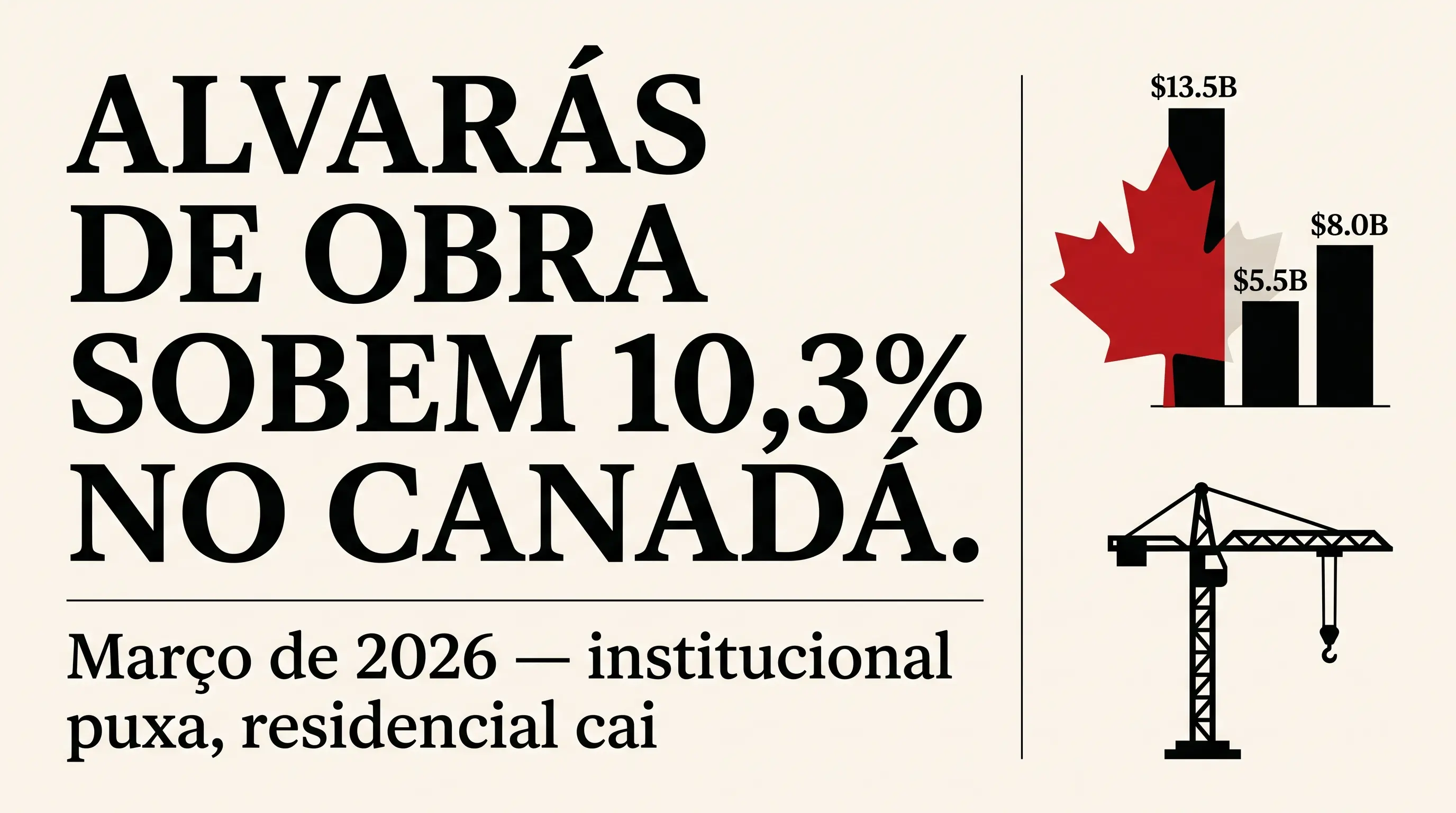
Canada building permits hit CAD 13.5 billion in March (+10.3%). Vancouver led institutional with a hospital; multi-family fell in ON/QC.
Canada's GDP stalled in Q1 2026, and the direction is downhill
Canada's GDP was flat (0.0%) in Q1 2026 after falling 0.2%. Technically not a recession yet, but the economy is losing steam.