CUSTO DE VIDA
New home prices in Canada fall 0.4% in April 2026 (and what that tells you)
In this article
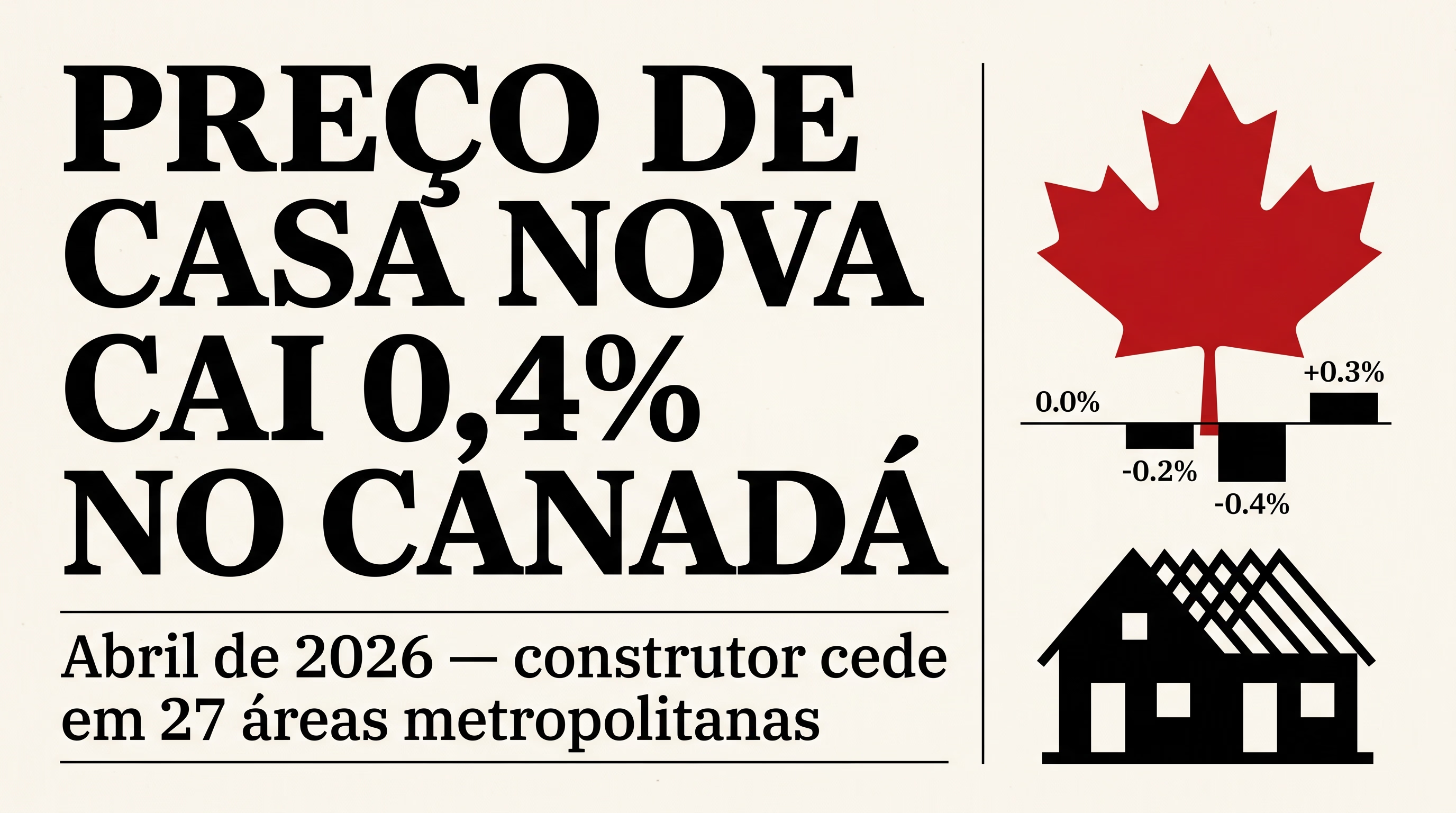
National NHPI fell 0.4% in April (monthly drop). Most provinces flat; the new-build market cooled. What it tells you if you want to buy.
Look at this number: StatCan released the New Housing Price Index for April 2026 and the national index fell 0.4% on the month, on its own, no pun about inflation or seasonal adjustment (the NHPI is not seasonally adjusted and StatCan itself says it is not revised afterward). It is a small move in absolute terms, but if you live here in Canada and you are trying to figure out where the new-home market is heading, this kind of monthly drop matters. When the NEW home price index falls with most provinces flat or slightly negative, it is a sign that the builder on the other side of the table is reading the release too.
The truth is this indicator does not speak to the house listed on the MLS by your neighbour. It speaks to what the builder charges today for a new unit, single-detached, semi-detached, or townhome. It is one of the earliest thermometers of the market, because the person setting the new price is the developer looking at inventory + construction cost + demand in real time. And they are choosing to hold or cut nominally across 27 census metropolitan areas tracked by StatCan. For a newly arrived Brazilian immigrant who dreams of buying, this shifts the tone of one specific conversation: pre-construction.
How much did new home prices in Canada fall in April 2026?
The national NHPI fell 0.4% in April 2026 on a monthly basis, according to the Statistics Canada release published on May 19. Most of the tracked provinces came in at 0.0% (flat) or slightly negative on the month. The observed moves stayed within a tight band of -0.9% to +1.2%, with no province spiking up on its own. The index tracks single-detached, semi-detached, and townhomes sold by the original builder, and uses December 2016 = 100 as its base. Prices are net of GST/HST, meaning they reflect what lands in the builder’s pocket, not what comes out of the buyer’s pocket.
Why did the NHPI slow down now?
The 0.4% drop in April fits a pattern that had been forming: high new-home inventory in several markets, slower sales, still-high interest rates weighing on financing. When the builder does not sell the unit at the planned pace, they have three options: hold and pay carrying cost, cut the list price, or throw in incentives (closing credits, free upgrades, mortgage rate buy-down). The NHPI captures the list price, so a national -0.4% may be masking bigger discounts via incentives. For you, negotiating: ask about incentives, not just the list price. That is where the builder is actually releasing money today in markets like Toronto, Calgary, and Vancouver.
What does this change for someone thinking about buying?
For someone who has lived in Canada for 2-3 years, has credit history built up, a downpayment saved, and is eyeing a new or pre-construction unit, the April 2026 signal changes the power conversation. If the national NHPI falls -0.4% on the month and your province’s index is at 0.0% or negative, the builder knows it. They read the same release. Use that in the negotiation. Anyone renting a new apartment in Toronto knows the landlord tracks these indicators too; the new-home buyer needs to do the same. In pre-construction (sold 12-18 months before completion), your leverage goes up especially, because the builder is still in the phase of trying to fill the floor plan, a phase where every unit sold changes the construction timeline.
How is the NHPI different from resale and rent?
The NHPI measures the price asked by the builder for a NEW home, first sale, no previous owner. It is different from the resale market (used homes, captured by the MLS/CREA HPI) and completely different from the rental market (captured by the CMHC Rental Market Report plus StatCan’s own CPI shelter component). Each of these three behaves with different lags and responds to distinct factors. In April 2026, the NHPI fell 0.4% on the month. That does NOT mean rent in Vancouver fell, nor that the 30-year-old house in your neighbourhood lost 0.4%. It only means the new-home builder is giving ground. Anyone buying a used home needs to look at the CREA HPI separately; anyone renting needs to look at the CMHC report and the CPI shelter component.
Where can you find the full data?
The official StatCan release carries the breakdown by province and by the 27 census metropolitan areas (CMAs) tracked, available on The Daily portal under ID dq260519e. If you want to pull the raw data, it goes to StatCan Table 18-10-0205-01, updated monthly. The next NHPI release, with May data, comes out on June 17, 2026, always in the same window of the following month. StatCan is also publishing a second edition of the New Housing Market Report, which goes beyond the index and shows average listing prices broken down by unit type, useful if you want to compare the asking price against the historical average for your CMA before making an offer. NHPI coverage has been expanding since August 2025, so each new release covers more cities than the previous one.
And in practice, what do I do with this information?
Three concrete moves if you live in Canada and you are thinking about a new home now:
- Save the breakdown for your CMA. Go to the StatCan link below, find your city in the table, note the current index + monthly change + 12-month change. Come back on the June 17 release and compare. You will have your own series to negotiate with.
- Ask about incentives, not just the list price. The national -0.4% in the NHPI understates the real discount. Closing credits, upgrades, rate buy-down sit outside the index. That is where the builder releases money today without touching the public number.
- Mentally separate NHPI from resale from rent. A new home falling is not the same as a used home falling, nor rent slowing. If you are not going to buy new, this release matters indirectly at best.
In one line: the April NHPI shows the new-home builder giving ground by 0.4% nationally, with most provinces flat. A signal for anyone negotiating pre-construction or a new unit, noise for anyone renting or buying resale.
Frequently asked questions
How much did new home prices in Canada fall in April 2026?
What is the NHPI and what does it NOT measure?
Does the NHPI falling 0.4% mean a house in Vancouver got cheaper?
When does the next NHPI release come out?
Is it worth negotiating pre-construction now based on this NHPI?
Sources
- Statistics Canada, New Housing Price Index, April 2026 (The Daily, 19/05/2026)
- Statistics Canada, Table 18-10-0205-01: New housing price index, monthly
- Statistics Canada, New Housing Market Report (second edition, companion series)
Last verification of this page: May 24, 2026. Next expected NHPI release: June 17, 2026 (May data). If you are reading this after that date, it is worth checking the new number directly on the StatCan channel before making a purchase decision. The April index was -0.4% and the monthly trend may have turned in any direction.
The Vancouver Letter
You made it this far. That tells me something.
The Vancouver Letter is the letter I wish someone had sent me the third time I tried for Canada, when I had no idea what I was doing wrong. Once a week, straight to your inbox. No products, no courses, just what actually works. I got your back.
Get immigration updates
Practical tips straight to your inbox.
Related articles
Canada building permits rise 10.3% in March 2026
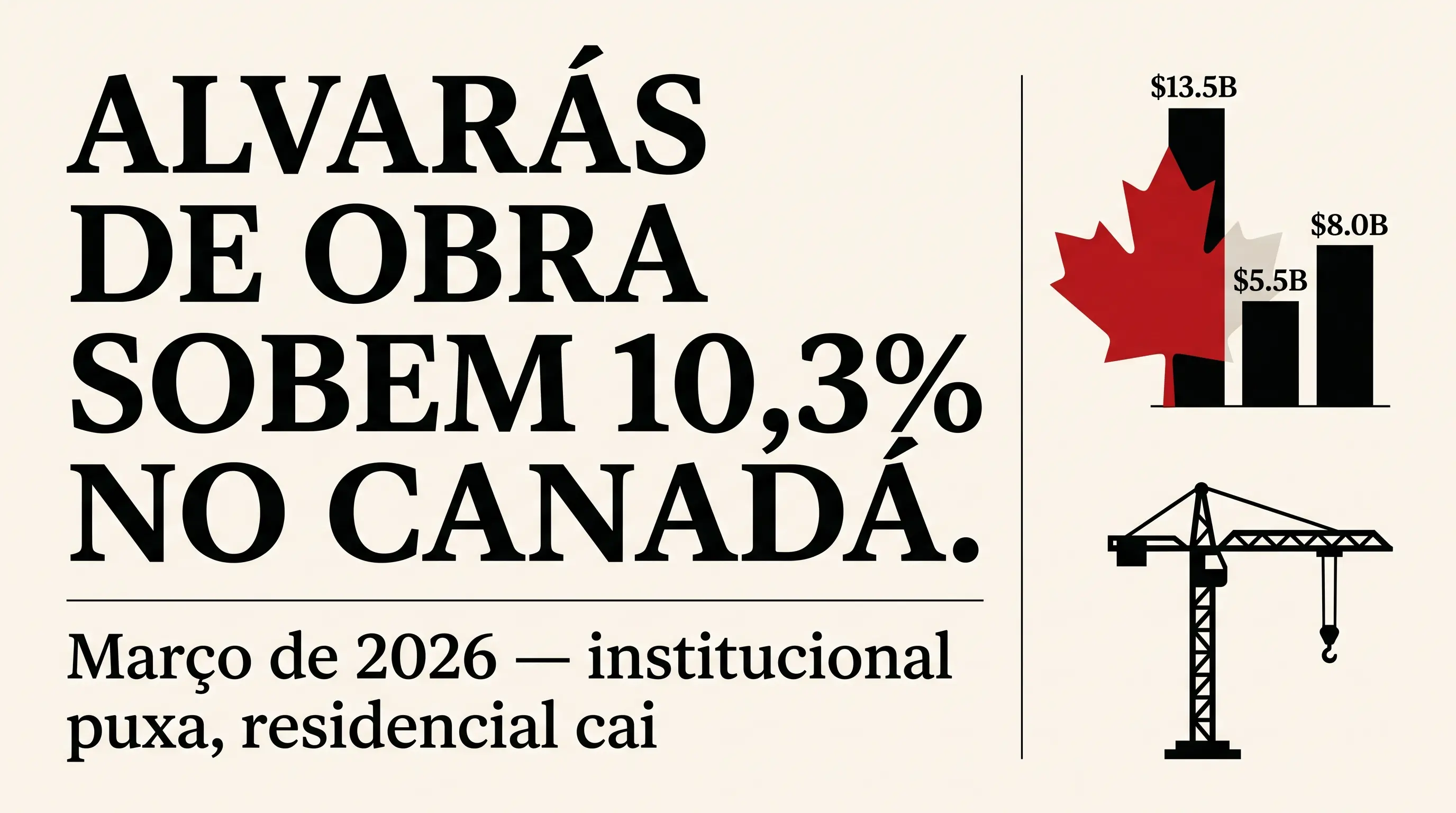
Canada building permits hit CAD 13.5 billion in March (+10.3%). Vancouver led institutional with a hospital; multi-family fell in ON/QC.
Rent in Canada fell: the official Q1 2026 numbers, city by city
Average asking rent for a 2-bedroom in Canada fell 0.9% to CAD 2,150. Vancouver, Toronto, Calgary and Halifax, with the official StatCan data.

Canada's GDP stalled in Q1 2026, and the direction is downhill
Canada's GDP was flat (0.0%) in Q1 2026 after falling 0.2%. Technically not a recession yet, but the economy is losing steam.